How to Create ai model for Your Brand (how to create ai model)
Learn how to create ai model for your brand with a concise, practical guide covering data, ethics, and deployment.
Creating a standout AI model, especially a virtual influencer, is a blend of art and science. It all starts with a clear vision for your digital persona, followed by gathering the right visual data and using powerful tools to bring it to life. This isn't just about code; it's about crafting a personality that can captivate audiences and even build a business.
Your Blueprint for a Viral AI Influencer
Welcome to the new frontier of digital influence. Think of this guide as your complete roadmap to building an AI model that doesn't just look real but feels real. We're going from a simple idea to a fully monetizable digital persona, and the journey starts long before you generate a single image. It begins with a rock-solid plan.
Every successful virtual influencer you see, from high-fashion icons on Instagram to viral TikTok personalities, was born from a clear vision. This first stage is all about nailing down the fundamentals that will make your character believable and connect with a specific audience. As you start planning, it's a good idea to check out platforms that specialize in AI model creation, especially if you're looking to create an AI fashion model generator.
The Core Components of Creation
This process is less about technology and more about storytelling. Before you touch any software, you need a detailed blueprint for your character. You have to think like a novelist or a brand strategist, asking the tough questions that will ultimately shape your final creation.
Here are the key areas you absolutely need to define from the get-go:
- Unique Identity: What’s their name, age, and background? More importantly, what are their core personality traits? Are they witty, adventurous, mysterious, or the friendly girl-next-door?
- Compelling Backstory: Where did they come from? What drives them? Giving your character motivations, dreams, and even some struggles makes them far more engaging.
- Target Audience: Who are you actually talking to? Knowing your audience's interests, values, and humor will dictate everything from your model's look to their tone of voice.
- Content Niche: Will your influencer focus on fashion, travel, gaming, or maybe exclusive content for subscribers on platforms like Fanvue? A clear niche is the fastest way to build a loyal following.
This infographic breaks down the high-level process of bringing your AI model to life.
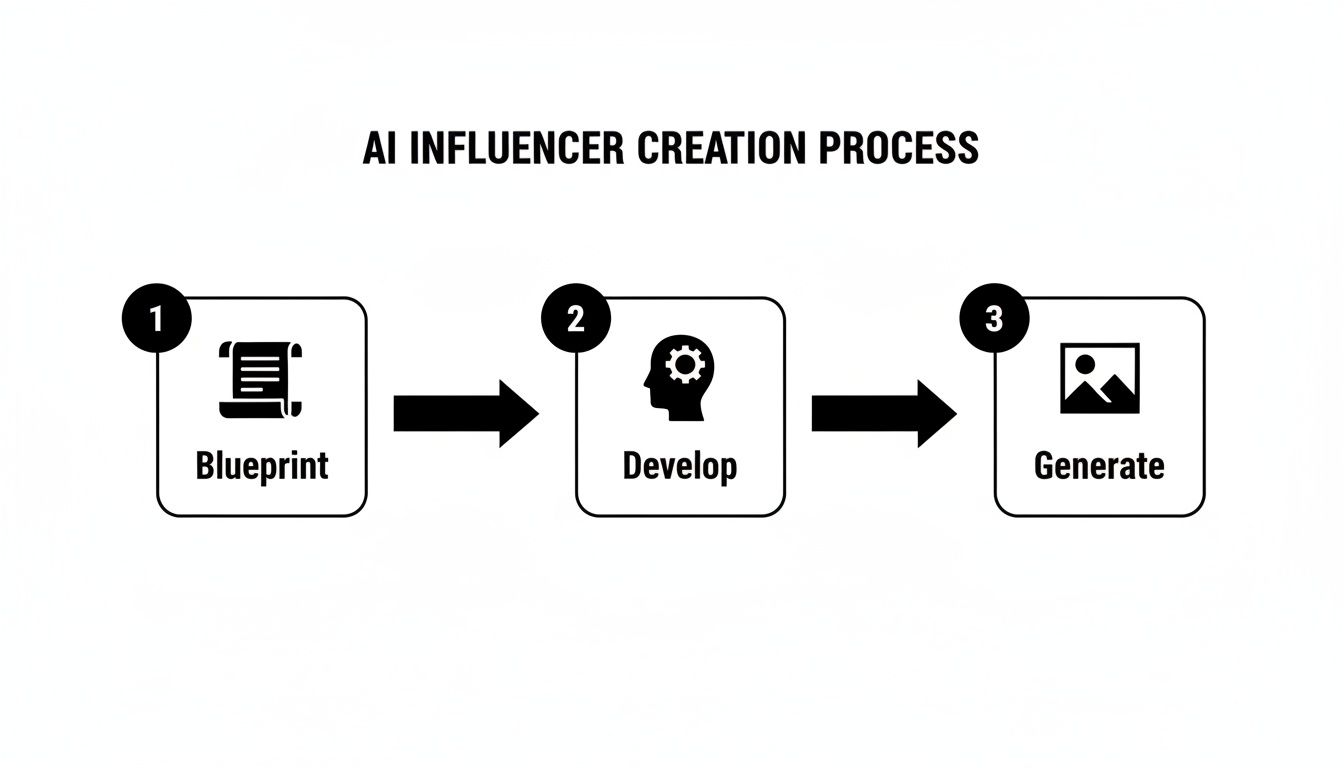
As you can see, a strong 'Blueprint' is the foundation for everything that follows.
A curated, high-quality dataset is the absolute cornerstone of a believable character. This collection of images is what teaches the AI your influencer’s face and style, and its quality directly impacts the realism and consistency of every photo and video you create.
To help you visualize the entire workflow, here’s a quick summary of the main stages.
AI Influencer Creation At a Glance
This table outlines the core stages involved in bringing your AI model to life, from the initial concept all the way to deployment.
| Stage | Key Objective | Recommended Tool or Action |
|---|---|---|
| Blueprint | Define the influencer's identity, niche, and backstory. | Brainstorming, market research, creating a character bio. |
| Development | Train a custom AI model on a consistent dataset. | Using a platform like CreateInfluencers to build your LoRA model. |
| Generation | Create high-quality, consistent images and videos. | Stable Diffusion with your trained model; video synthesis tools. |
| Deployment | Publish content and engage with your audience. | Instagram, TikTok, Fanvue, OnlyFans. |
Following these steps in order ensures a much smoother and more successful launch.
Ultimately, putting in this foundational work ensures every decision you make down the line is purposeful. For those eager to get going, using a dedicated platform can handle many of the technical hurdles, freeing you up to focus on the creative side of things. You can learn more about this approach by checking out our complete guide on the AI-generated influencer.
Laying the Foundation: Persona and Data
Before you even think about generating an image, you have to give your AI model a soul. I’ve seen countless technically brilliant AI influencers fall flat because they lack a believable personality. This first stage is absolutely critical—it's where you move from a vague idea to a fleshed-out character that will inform every single piece of content you ever create.
Think of it like being a casting director for a blockbuster movie. You wouldn’t just pick a random actor; you’d build a character from the ground up, giving them a backstory, a unique style, and clear motivations. Your AI influencer needs that same depth to stand out in a ridiculously crowded market.
Crafting a Character People Actually Care About
The first real step in creating an AI model is defining who they are. This goes way beyond just their looks; it's about building a digital person that feels real and relatable. You need to get specific and ask the tough questions to truly bring them to life.
Start with the basics and layer on the details:
- Name and Demographics: What’s their name? How old are they? Where are they from? These simple facts immediately ground your character in a believable world.
- Personality and Values: Are they an adventurous extrovert or a thoughtful, quiet type? What do they stand for? A character driven by clear values feels far more authentic.
- Interests and Hobbies: What do they love doing? Maybe they're a gym rat, a dedicated gamer, a fashion aficionado, or a non-stop traveler. These passions become your content pillars.
- A Real Backstory: What drives them? What have they been through? A compelling backstory adds layers of depth and gives your audience an emotional hook.
For example, don't just create a generic "fashion model." Instead, create "Anya," a 24-year-old sustainable fashion advocate from Stockholm who ditched her soulless corporate job to thrift her way across the globe. See the difference? That's a character with a story. A well-defined persona is the secret sauce to great AI character design and gives you a clear compass for all future content.
Your goal is to know your character so well that you can instantly predict how they’d react, what they’d wear, or how they’d caption a photo. That level of detail is what creates consistency and makes them believable.
Getting Your Training Data Right
Once you know who your character is, you need the raw visual ingredients to bring them to life. This is your training dataset—a curated collection of images that teaches the AI exactly what your model looks like. Honestly, the quality of this dataset is probably the single most important technical factor in this whole process. A garbage dataset will give you a generic, inconsistent, or just plain weird-looking model, no matter how clever your prompts are.
The whole point here is to give the AI a complete, 360-degree understanding of your character's face from every possible angle, in all sorts of situations. This is what empowers the AI to generate brand-new images while keeping the look perfectly consistent.
The Nitty-Gritty of Building a Strong Dataset
Putting together the right photos is a job for a perfectionist. A classic mistake I see all the time is people using too few images or a bunch of photos that all look the same. For results you'll actually be happy with, you need variety and quality.
Here’s exactly what you should be focusing on:
- Image Count: You need at least 20-30 high-quality photos. More can be better, but don't sacrifice quality for quantity. Ditch anything blurry, pixelated, or poorly lit.
- Angle Variety: Get photos from every angle imaginable—straight on, three-quarter view, side profile, and even shots from slightly above or below. This helps the AI learn the 3D structure of their face.
- Lighting is Key: Mix it up with different lighting conditions. Shoot in bright sunlight, in the shade, and under various indoor lights. This stops the model from getting "stuck" on one lighting style and makes it far more flexible.
- Show Some Emotion: Don't just feed it a dozen smiling selfies. You need a full range of expressions: happy, serious, thoughtful, surprised, you name it. This gives your AI a much wider emotional palette to work with.
- Clean Up the Background: While not a deal-breaker, simple, uncluttered backgrounds usually work best. You want the AI focused entirely on the person, not on a distracting plant or a weird lamp in the background.
By putting in the hard work upfront to create a rich persona and a meticulously curated dataset, you’re setting the stage for an AI model that isn't just a pretty face, but a genuinely engaging digital personality.
Choosing Your Tools to Generate First Images
Alright, you’ve nailed down your persona and gathered your training data. Now for the exciting part: bringing your AI model to life. This is where your concept starts to become actual, visual content. And the best part? You don't need to be a coding wizard to do it. The tech has come a long way, making it surprisingly accessible.
You've got two main paths you can go down. The first is the DIY route—training a custom model from the ground up. This gives you ultimate control, but it's a steep technical climb. The other option, which is where most creators land, is using a platform like CreateInfluencers. It does all the heavy lifting on the backend, freeing you up to focus on what matters most: the creative direction.
No matter what tool you pick, it all comes down to text prompts. Getting good at writing prompts is the single most important skill for anyone figuring out how to create ai model images that actually look the way you envision.
Mastering the Art of the Prompt
Think of a prompt as your creative brief to the AI. A lazy prompt gets you a boring, generic image. A detailed, specific prompt gets you something that stops the scroll. You’re not just typing words; you’re an art director telling a photographer exactly what you want.
A solid prompt needs a few key ingredients:
- Subject: Be specific. Describe your AI influencer, what they look like, and what they’re doing.
- Style: What’s the vibe? "Photorealistic," "cinematic," "vintage polaroid," or "8k high detail" are all good starting points.
- Setting: Where are they? A "sun-drenched beach in Bali" feels very different from a "moody, neon-lit Tokyo alley."
- Lighting: This is crucial for mood. Try "golden hour," "soft studio lighting," or "dramatic backlighting."
- Composition: Direct the camera. Is it a "close-up portrait," "full body shot," or a "dynamic action shot"?
So, instead of just writing "woman at a cafe," you’ll get worlds better results with something like: "Photorealistic image of Anya, a 24-year-old Swedish woman with blonde hair, sitting at an outdoor Parisian cafe, smiling softly, golden hour lighting, cinematic, 8k resolution." The AI has a clear blueprint to work from.
Pro Tip: I recommend creating a "style signature" for your prompts. This is just a short phrase you tack onto the end of every prompt to keep your visual aesthetic consistent. It's a simple trick that does wonders for brand identity.
Generating Diverse Content with Themed Packs
Once your model is ready, you need content. Lots of it. Manually writing prompts for every single post idea is a grind. This is where themed photo packs, especially on a streamlined platform, are a total lifesaver.
These packs are essentially pre-built prompt templates designed for specific situations. With one click, you can generate a whole batch of images tailored to a certain theme, which is a massive time-saver and ensures you always have a variety of content on hand.
A few common examples I see people using all the time:
- Instagram Photoshoot Pack: Gives you those polished, high-fashion shots that are perfect for building out a grid.
- Tinder Photo Pack: Creates a set of casual, friendly, and attractive photos that work great for dating app profiles.
- Old Money Aesthetic Pack: Generates images with that timeless, sophisticated, and luxurious feel.
Using packs like these helps you build out a full portfolio for your AI model in a fraction of the time, covering everything from professional shots to casual, everyday moments. To get a feel for the different tools out there, it's worth checking out our guide on the best free AI image generators to see what the broader landscape looks like.
Advanced Techniques for Dynamic Visuals
Ready to move beyond basic prompts? Two of the most powerful features you can start playing with are face swapping and body swapping. These let you drop your influencer into almost any image you can find, all without having to retrain your model.
Face swapping is exactly what it sounds like. You take an existing photo—maybe a stock image or even a meme—and seamlessly drop your AI influencer's face onto it. This is fantastic for creating timely reaction content or placing your model in specific real-world settings.
Body swapping works in a similar way, letting you put your influencer’s face onto a different body from a source image or another AI generation. This is a game-changer for trying out new outfits, poses, or even different body types that might be a pain to describe in a prompt. It cuts down your creation time dramatically and gives you a ton of creative freedom, making your influencer feel much more adaptable and real.
Bringing Your Model to Life with Voice and Video
So, you’ve got a set of incredible, lifelike images of your AI model. That’s a huge first step, but it’s really just the foundation. If you want to create a character that truly captivates an audience and feels real, you need to add motion and sound. This is where we go from a digital portrait to a dynamic, engaging digital human.
The next leap in creating an AI model that truly connects with people is moving into dynamic formats. We're talking about short video clips, animated GIFs, and even using voice synthesis to make your character speak. It’s an absolute game-changer for building a genuine following on platforms like TikTok or engaging with fans during a live stream.
Animating Your Influencer with Voice
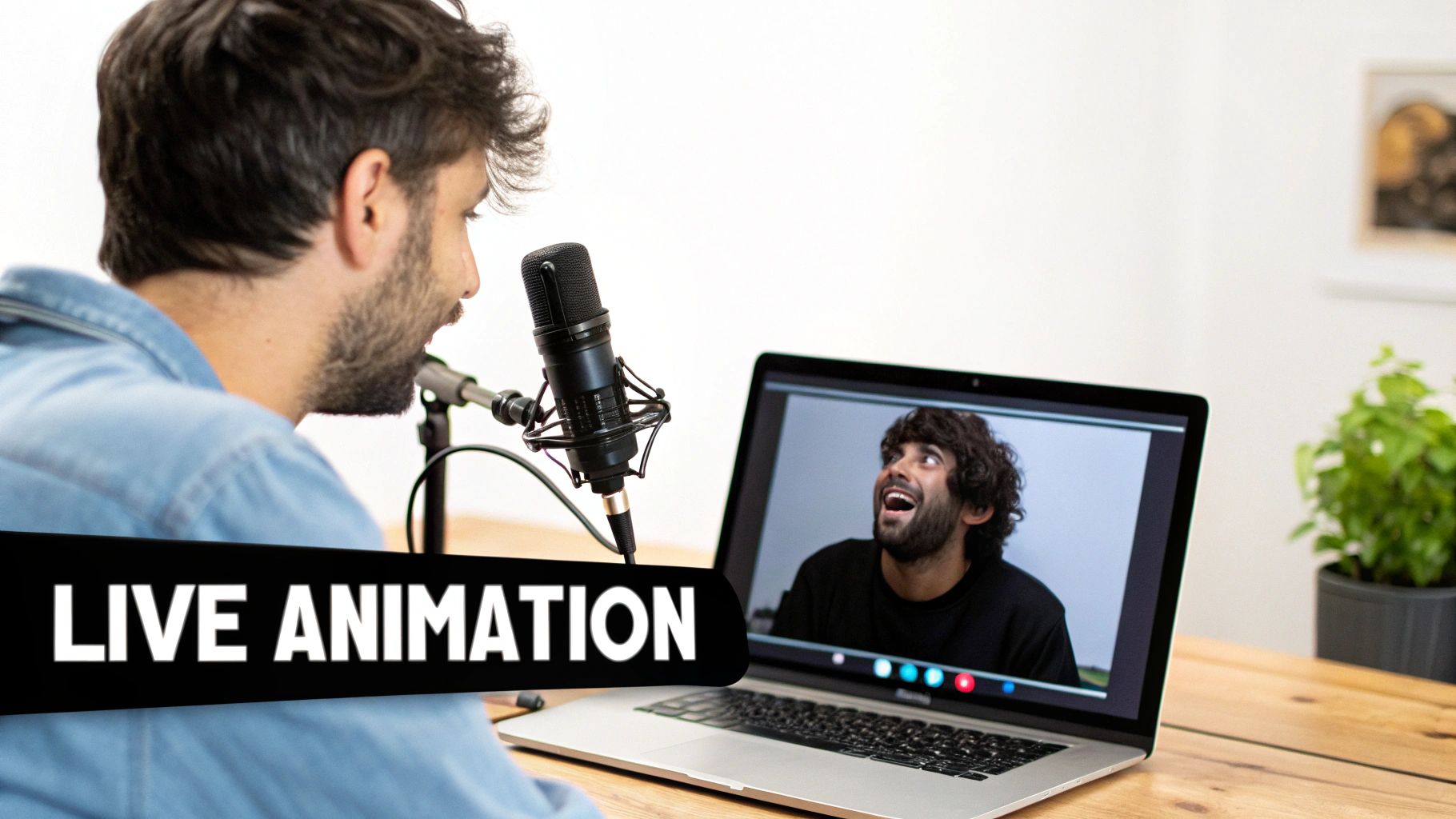
One of the most powerful ways to breathe life into your AI influencer is with voice-driven animation. The technology is frankly amazing—you upload an audio clip or speak into your mic, and the AI animates your model's face to sync perfectly with the words. Suddenly, your character isn't just posing; they're delivering monologues, reacting to comments, and starring in their own short-form content.
This unlocks a massive range of content possibilities:
- TikTok and Reels: Imagine your influencer sharing a quick story, offering a tip, or jumping on the latest trending challenge. It's all possible.
- Interactive Live Streams: You can engage with your audience in real-time. Have your model respond directly to questions and comments with realistic facial movements.
- Personalized Messages: On platforms like Fanvue, you can offer subscribers custom video messages from your influencer. This creates a super valuable and exclusive product that fans love.
This kind of interactivity is what separates a basic AI model from a true virtual personality. It makes them feel present and believable. If you want to dive deeper, we have a complete guide on using a talking avatar creator to get you started.
From Standard Definition to Stunning HD
In the hyper-visual world of social media, image quality is everything. A slightly blurry or pixelated photo can shatter the illusion of realism in a second, making your whole project look amateurish. That’s why upscaling isn't just a "nice-to-have"—it's an essential part of the workflow.
Most AI image generators output images at a standard resolution, something like 1024x1024 pixels. That’s fine, but it won’t look sharp on a high-res screen or as a full-bleed Instagram post. Upscaling tools, like the HyperReal engine built into platforms such as CreateInfluencers, use AI to intelligently boost the image resolution, adding crisp detail without those ugly digital artifacts.
Think of upscaling as the final professional polish on your content. It’s the difference between an image that’s just okay and one that stops someone mid-scroll because it’s so stunning.
This step is absolutely critical for building and maintaining the premium aesthetic your AI influencer needs to stand out.
The Growing Power of Generative Tools
This ability to create such convincing content is part of a much bigger trend. The generative AI software market is set to explode, projected to grow from $63.7 billion in 2025 to a staggering $220 billion by 2030. That incredible growth is what’s fueling the development of sophisticated yet accessible tools that make this all possible. The economic potential is just as massive, with some studies suggesting GenAI could add trillions in annual value to the global economy. You can find more of these generative AI statistics on masterofcode.com.
This boom is driving the tools that go beyond static images to generate video clips and animations.
Generating Dynamic Video Content:
- Short Clips: Use text-to-video features to create brief, atmospheric scenes. Picture your influencer sipping coffee, gazing out a window in a rainy city, or walking down a bustling street.
- Animated GIFs: These are perfect for creating quick reaction memes or adding a splash of personality to your social media posts and stories.
When you combine high-resolution upscaled images with voice-driven animation and short video clips, you create a rich, multi-faceted digital personality. Your AI model is no longer just a gallery of pretty pictures; they're a dynamic character ready to build a real audience and a lasting brand.
Monetizing Your AI Influencer and Building a Brand
So you’ve brought your AI model to life. That's a huge milestone, but it's really just the beginning. Now comes the fun part: turning your creation into a real, money-making brand. This is where you shift gears from artist to entrepreneur.
The most popular and direct path to revenue right now is through subscription sites. Platforms like Fanvue and Fansly have absolutely exploded, creating a hot market for AI-generated content. Fans are actively looking to pay for exclusive access to their favorite digital personalities, giving you a shot at a steady, recurring income—the dream for any creator.
Building Your Subscription Empire
Making it big on a platform like Fanvue isn't just about dumping a bunch of random images and hoping for the best. You need to give people a reason to subscribe—content that feels special and personal. I've found that creating themed content packs is one of the most effective ways to do this.
Think of these as curated collections that offer something more than what followers see on your public social media.
- Behind-the-Scenes Access: Post "unfiltered" or "candid" shots. This simple trick makes your AI influencer feel more grounded and gives your biggest fans a sense of being on the inside.
- Themed Photoshoots: Drop exclusive image sets built around holidays, viral trends, or specific aesthetics that your audience is into.
- Personalized Content: For your top-tier subscribers, offer to create custom images or even short video messages. This is a powerful way to forge a real connection and justify a higher price point.
The key is consistency. By delivering a steady stream of fresh, high-quality content that people can't find anywhere else, you build a loyal following and a solid financial base for your brand. If you want to go deeper, we've got a whole guide on monetising digital content with more advanced tactics.
The real secret to monetization isn't just selling content; it's about selling a connection. Subscribers aren't just paying for images; they're investing in the persona and the story you've built.
Expanding Beyond Subscriptions
While subscription platforms are a fantastic starting point, you don't want to put all your eggs in one basket. A diversified income strategy is just smart business. As your AI influencer's following grows, you’ll find that brands will start paying attention.
Brand collaborations are a classic for a reason, and they work just as well for AI personas. Companies are getting much more comfortable partnering with virtual influencers, especially when their vibe and audience match the brand. Imagine a fitness-focused AI model landing a deal with a supplement company, or a high-fashion AI working with luxury brands. It's already happening.
Leveraging Social Media for Growth
Think of your public social media profiles on Instagram and TikTok as your welcome mat. This is where you attract new fans and give them a taste of your influencer's personality, hopefully convincing them to become paying subscribers down the line.
To really get noticed, you need to understand the platform. Brushing up on strategies for AI Instagram growth can make a huge difference in your reach and follower count. A bigger, more engaged audience on these free platforms makes your influencer a much more appealing partner for brand deals.
Here are a few other powerful ways to make money:
- Affiliate Marketing: Have your AI influencer promote products they "use." You earn a commission on sales, and it feels authentic as long as the products genuinely fit their character.
- Selling Digital Products: Don't just sell subscriptions—sell your own stuff. This could be anything from custom photo packs and digital art to guides related to your influencer's niche.
- Sponsored Content: Go beyond basic posts. Think sponsored YouTube videos (using voice synthesis!), TikTok challenges, or Instagram story takeovers.
Building a successful AI influencer brand is a marathon, not a sprint. It's a constant loop of creating, engaging with your community, and smartly monetizing your work. By blending a strong subscription model with other revenue streams, you can turn a cool creative project into a seriously profitable business.
Navigating the Legal and Ethical Landscape
When you decide to create an AI model, you're not just making content; you're taking on a real responsibility. It’s easy to get lost in the creative process, but ignoring the ethical and legal side of things is a surefire way to run into trouble down the road. This stuff is critical for building something that lasts.
One of the first questions that always comes up is intellectual property. So, who actually owns the images and videos your AI spits out? The law is still catching up, but the general consensus is that you, the person guiding the AI, hold the rights. Still, it's a bit of a gray area, so make sure you read the fine print on any tool you use.
Upholding Transparency and Trust
Your audience's trust is everything. If you try to pass off your AI influencer as a real person, you’re playing with fire. It might work for a little while, but when the truth comes out—and it always does—the backlash can completely destroy your brand.
The best approach? Be upfront from the start. A simple line in your bio like "A digital creation" or "AI-generated" is all it takes. This honesty actually builds a stronger connection. People will appreciate the art and creativity involved, and they'll feel like they're in on the project with you, not like they've been fooled.
Being honest about your influencer's AI origins is non-negotiable. Authenticity, even for something that isn't real, is what people connect with.
Adhering to Platform Rules
Every single platform, whether it's Instagram or a monetization site like Fanvue, has its own set of rules. You have to treat their terms of service like a bible, especially if you're creating adult-oriented content where the policies around AI can be incredibly strict.
Here’s a practical checklist to keep you out of trouble:
- Know the Policies: Don't just skim the terms of service once. Revisit them often, as platforms update their rules about AI content all the time. Pleading ignorance won't save your account if you get flagged.
- Label Your Content: If you're posting anything that could be considered sensitive, use the platform's tools to label it correctly. This keeps your account in good standing and makes sure your work is only seen by people who want to see it.
- Avoid Copyright Infringement: This is a big one. Never, ever use real people’s faces, copyrighted logos, or protected images in your generations without getting clear permission. It's an easy way to get hit with a legal notice.
Operating with integrity isn't just about avoiding a ban; it's about building a solid foundation for your project. When you respect the rules and your audience, you create something that can genuinely succeed.
Got Questions About Making an AI Model? We've Got Answers
Stepping into the world of AI influencers is exciting, but it definitely comes with its share of questions. I hear the same ones crop up all the time from people just starting out. Let's clear the air on some of the most common hurdles you might face.
How Many Photos Do I Really Need to Train My Model?
This is easily the number one question I get. While there isn't a single magic number, a solid starting point is 20 to 30 high-quality images. The key here is diversity. You want pictures from different angles, with varied lighting, and showing a range of expressions.
This gives the AI enough visual information to truly understand the character's face, which is crucial for getting consistent results later on. Don't just dump in 30 nearly identical selfies; that won't help much.
Can I Mash Up Different People to Create a New Face?
It’s a cool idea, right? Take a few features from one person and a few from another to create someone totally unique. While this is technically possible with advanced techniques like model merging, I strongly advise against it when you're starting.
Trying to blend different people often leads to a mess—weird artifacts, inconsistent faces, and just plain unpredictable results. It’s a fast track to frustration.
The most important thing for your initial training data is consistency. Sticking with a high-quality set of photos from one real person (with their permission, of course!) is the surest way to create a character who looks like the same person in every single picture.
That believability is what separates a great AI influencer from a forgettable one.
Do I Need to Be a Coding Genius to Do This?
Not anymore. A few years ago, you absolutely needed a serious technical background. But today? The game has completely changed. If you're worried about needing to be a machine learning expert, you can relax.
Modern platforms have done all the heavy lifting for you.
- No-Code Tools: The best platforms have user-friendly interfaces that hide all the complex stuff. You don't see the code; you just see the results.
- Creative Control: This setup lets you pour your energy into what actually matters: crafting a compelling character, dreaming up interesting scenarios, and building your content strategy.
Honestly, if you can write a descriptive sentence and are comfortable clicking a mouse, you have all the technical skill you need to create a stunning AI model from scratch.
Ready to stop wondering and start creating? CreateInfluencers packages everything you need—from one-click model training to generating HD videos—into one simple platform. Start building your AI influencer for free today at https://createinfluencers.com.