Your Guide to the AI Generated Influencer Trend
What is an AI generated influencer? This guide explores how they work, the brands using them, and the pros and cons of this major marketing shift.
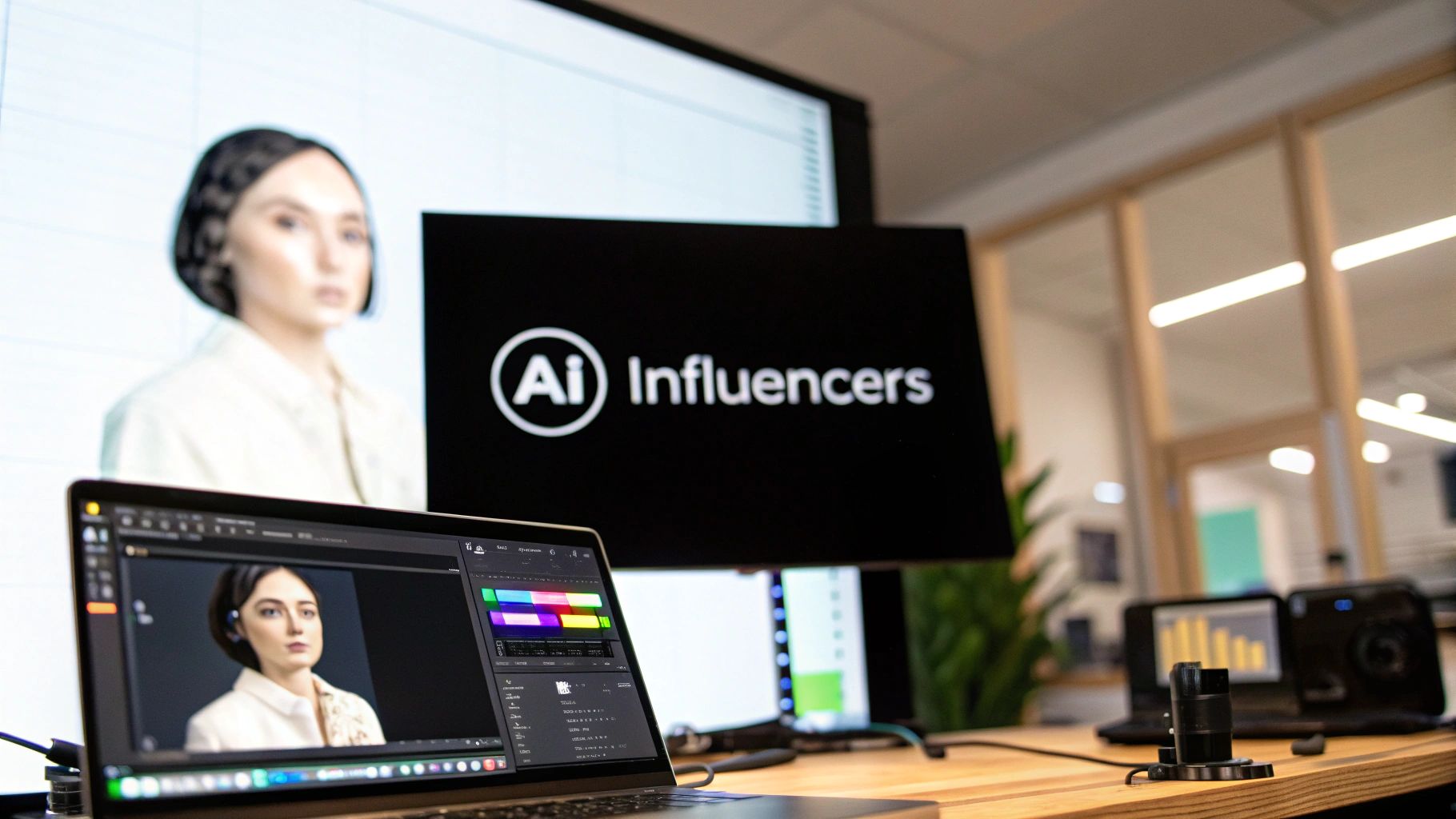
At its core, an AI-generated influencer is a digital character, brought to life with computer graphics and artificial intelligence. They're built to promote products and connect with audiences on social media, performing the exact same role as a human influencer.
While these personalities aren't real people, they can attract massive followings and secure partnerships with major brands. This gives marketers a new, highly predictable way to shape their brand's story.
What Exactly Is an AI-Generated Influencer?

Picture a brand ambassador who’s available 24/7, never strays from the message, and can appear anywhere in the world in an instant. That's what an AI-generated influencer brings to the table. These aren't just simple avatars or cartoon figures; they are sophisticated digital creations with unique personalities, detailed backstories, and curated styles designed to connect with very specific audiences.
Think of them as digital actors who are perfectly cast for a brand's campaign. A creative team uses 3D modeling software to design every detail of their appearance, from their facial structure to their wardrobe. Then, artificial intelligence gives them a voice, generating social media captions, handling follower interactions, and even adjusting their persona over time based on real engagement data.
The Technology Behind the Persona
Building a believable virtual influencer is a fascinating mix of creative artistry and serious technology. The process typically relies on a few core components working together:
- 3D Modeling: This is where the artist comes in, building the character's digital skeleton and visual appearance to make sure they look both realistic and engaging.
- AI and Machine Learning: These are the brains of the operation. Algorithms write their posts, analyze audience reactions, and help steer their content strategy for maximum impact.
- Animation and Rendering: To create compelling video content, these digital models need to move. To get a better sense of this process, you can explore how to animate a picture using powerful AI tools.
This blend of technologies gives brands a level of control and consistency that’s simply not possible with human talent. A company can design a persona that mirrors its values perfectly, without ever having to worry about real-world scandals or logistical nightmares.
An AI influencer removes the element of human unpredictability. The brand keeps 100% control over the story, messaging, and visual style, making sure every single post aligns perfectly with the campaign's objectives.
As these digital stars become increasingly lifelike, the line between the real and the virtual gets a little fuzzier. They represent a major shift in the marketing world, offering a scalable and genuinely new alternative to traditional influencer partnerships.
To dive deeper into this trend and others shaping the future of marketing, feel free to explore our collection of articles and tutorials. You can find more information in our various https://createinfluencers.com/guides.
How Virtual Influencers Are Flipping the Script on Brand Campaigns
The rise of the AI-generated influencer isn't just another flashy marketing trend; it’s a strategic shift that fundamentally changes how brand campaigns are built from the ground up. The biggest game-changer? The incredible level of creative control it puts back into the hands of marketers.
Think about it. You can literally design your ideal brand ambassador from scratch. You get to decide their personality, their values, and their entire aesthetic to perfectly mirror your brand. This means no more hoping a human influencer stays on-message or worrying about off-brand behavior. With an AI influencer, every single post and interaction is perfectly tuned to your campaign goals.
This control goes way beyond just the message. Need your spokesperson in Paris for a morning shoot and Tokyo for an evening event? No problem. An AI-generated influencer has a 24/7 global reach without the logistical nightmare, allowing you to engage with audiences in any time zone and maximize your campaign's impact.
Getting More Bang for Your Buck with Digital Personas
Beyond the creative freedom, the numbers just make sense. The influencer marketing industry is already massive, projected to hit over $32 billion with a growth rate of nearly 35% each year. In this booming market, an AI-generated influencer is an incredibly cost-effective option.
A top-tier human influencer might command $8,000 or more for a single campaign. A virtual influencer, on the other hand, can deliver high-quality content for as little as $4,000. That makes them a fantastic choice for brands that need to make every dollar count. You can learn more about the latest influencer marketing trends on thunderbit.com.
This efficiency isn't just about saving money. It frees up your budget for other important things, like boosting content with paid ads or investing in higher production quality. It also opens the door for smaller businesses to get into influencer marketing without the massive upfront cost.
The real power of an AI-generated influencer is their predictability. Brands can map out costs, control the story, and scale content creation with a certainty that's almost impossible to get from human collaborations.
Crafting Unshakeable Brand Stories
Consistency is what builds brand loyalty, and virtual influencers are the ultimate masters of it. Human influencers have their own lives, personal opinions, and the occasional bad day, all of which can lead to messaging that veers off-course. An AI-generated influencer is a steady, reliable asset.
Here’s what that looks like in practice:
- Always On-Brand: They never have an "off day" or post something controversial that could create a PR headache.
- Long-Term Storytelling: Brands can weave complex stories around their virtual ambassador that unfold over years, building a much deeper connection with their audience.
- Effortless Adaptation: An AI influencer's style can evolve in lockstep with new market trends or product lines, keeping them fresh and relevant.
Ultimately, these campaigns are about turning online buzz into real business results, which is why smart strategies for social media for lead generation are so important. By delivering a consistent, controlled message, brands can build more dependable marketing funnels. Using a virtual influencer isn't just about being new and different; it's about building smarter, more efficient, and easily measurable campaigns. For more creative ideas, head over to the https://createinfluencers.com/blog.
Meet the Digital Stars of Social Media
AI-generated influencers might sound like something out of science fiction, but virtual celebrities are already here, and they’re commanding the attention of millions. These digital pioneers aren't just tech demos; they are fully-formed personalities with devoted fanbases and major brand deals, proving that a digital persona can make a very real impact.
Let's meet a few of the stars leading the charge.
You've probably already heard of Lil Miquela. Crafted by the firm Brud, Miquela is a perpetually 19-year-old musician, activist, and style icon from Downey, California. She's amassed nearly 2.5 million followers on Instagram by building a rich world complete with a backstory, friends (both human and virtual), and a public persona that isn't afraid to tackle social issues. Her digital identity is so compelling that she’s landed huge campaigns with brands like Calvin Klein and Samsung.
This screenshot from Lil Miquela's Instagram gives you a feel for her unique aesthetic—a seamless mix of digital art and high fashion.
Her feed feels personal and carefully curated. It’s a blend of professional-looking shots and seemingly "candid" moments, effectively blurring the line between a real person's life and a scripted digital narrative.
The World's First Digital Supermodel
While Miquela broke new ground with her intricate personality, other creators were busy pushing the limits of realism. One of the most striking examples is Shudu Gram, who is widely celebrated as the world's first digital supermodel. Her hyper-realistic appearance immediately turned heads in the fashion world.
Initially, her creator, photographer Cameron-James Wilson, kept her digital origins a secret. Her flawless look quickly led to collaborations with high-end brands like Fenty Beauty, which famously used her image to showcase a new shade of lipstick. Shudu represents a different flavor of AI-generated influencer—one built on pure aesthetic perfection and artistic expression rather than a day-to-day personal story.
These early pioneers proved that an AI-generated influencer could be far more than a gimmick. By building distinct personalities and visual styles, they showed everyone they could attract genuine engagement, build communities, and deliver real results for brand partners.
Building Your Own Digital Star
The success of Miquela and Shudu has opened the door for a whole new wave of digital creation. The great news is, you no longer need a massive creative agency to jump in.
Today, aspiring creators and brands can experiment with this technology themselves. You can learn how to create your own AI influencer with CreateInfluencers and start exploring the tools that bring digital personas to life. The field is wide open, giving anyone the chance to craft a unique virtual identity from the ground up.
Navigating the Challenges of Authenticity and Trust
Having complete creative control over an AI-generated influencer sounds like a dream, but it opens up a whole new can of worms. The biggest challenges? Authenticity and trust.
When people follow an influencer, they're looking for a real connection. The problem is, the manufactured perfection of a virtual influencer can feel cold or, even worse, deceptive. If you're not careful, that perfect image can create a major disconnect with your audience.
This "authenticity gap" is a serious hurdle for brands. Today's audiences are smart; they can spot sterile, disingenuous content from a mile away. If consumers feel like they've been tricked by a persona that's too flawless or isn't clearly marked as a digital creation, you're setting yourself up for a PR nightmare.
The Uncanny Valley Effect
One of the trickiest things to get right is avoiding the uncanny valley. This is that creepy, unsettling feeling you get when you see something that looks almost human, but not quite. It’s a gut reaction, and it’s a powerful one.
If your AI-generated influencer lands in that valley, the connection you're trying to build will curdle into discomfort or outright skepticism. And this isn't just about looks—it’s about their personality, too. If their replies feel scripted or their emotions seem programmed, the whole illusion shatters. The key is to either go with a clearly stylized, fictional look or create something so hyper-realistic that it completely sidesteps that uncanny feeling.
The infographic below shows how two of the biggest digital stars, Lil Miquela and Shudu Gram, pulled this off in their own unique ways.
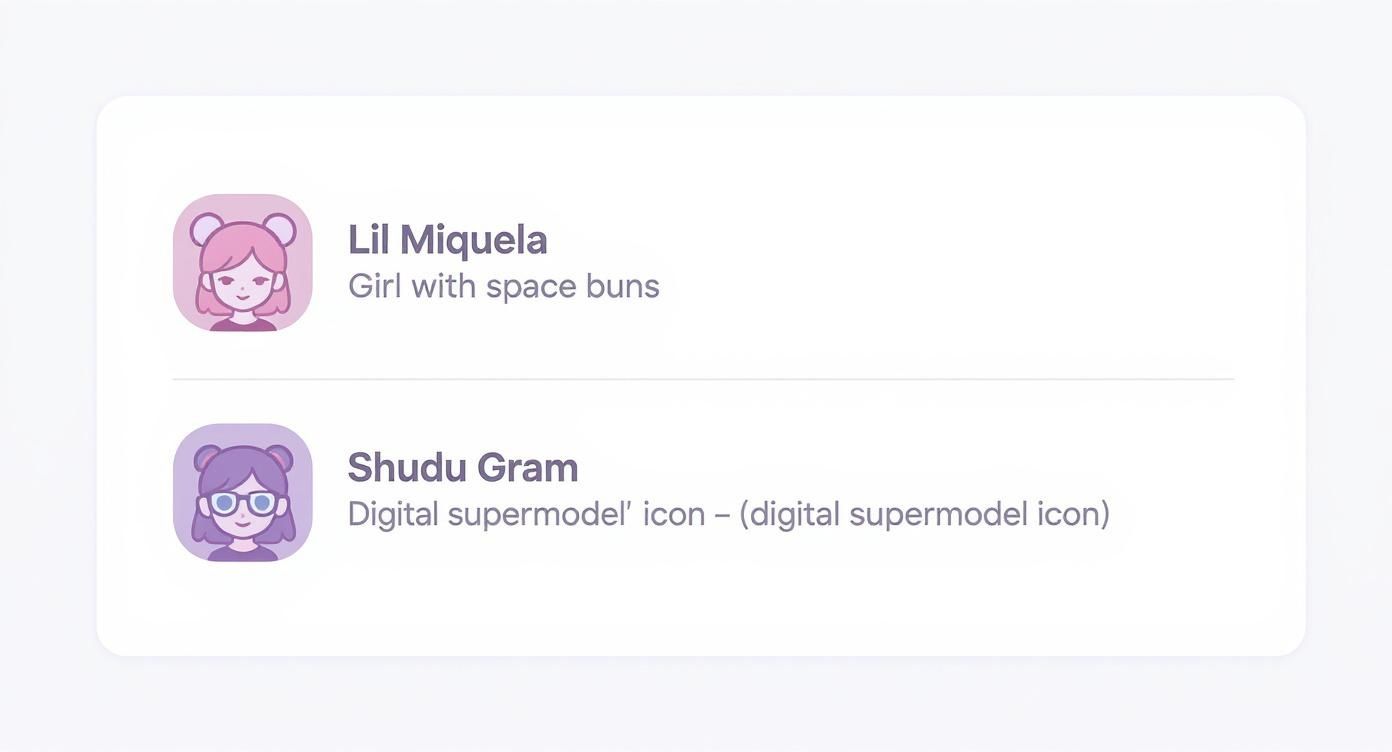
As you can see, Lil Miquela leans into a stylized, digital-native vibe, while Shudu Gram aims for jaw-dropping realism. Both are valid paths, but they show just how carefully you have to tread.
Transparency Is Non-Negotiable
People are definitely talking about AI influencers—and the conversation is getting louder. In the first five months of one recent year, social media mentions shot up by 50%, sparking over 114,000 discussions.
But it’s a complicated relationship. We've already seen big brands get into hot water for using AI models without being upfront about it. In fact, a whopping 96% of brands that steer clear of AI influencers cite consumer trust as their main reason. For a deeper dive into how brands feel about this, check out the data on Business Insider.
This is why transparency isn't just a good idea; it's absolutely essential.
A brand's reputation is built on trust, and that trust is fragile. Clearly disclosing that an influencer is an AI creation isn't a weakness; it's a sign of respect for the audience, which can turn potential skepticism into genuine curiosity and engagement.
At the end of the day, it's a balancing act. You have to weigh the incredible control you get with an AI influencer against the very real need to build a trustworthy, authentic bond with your audience. Without that foundation, even the most polished campaign is doomed to fail.
Can a Digital Persona Create a Real Connection?
This is the billion-dollar question every brand and creator is asking. Can a digital creation, no matter how lifelike, actually build a real, lasting bond with an audience? The answer isn't simple, and it gets to the heart of what makes a community feel like, well, a community.
Think about the influencers you follow. We connect with them because of their shared experiences, their moments of vulnerability, and their unscripted, spontaneous reactions. We bond with people who show us their messy kitchens, open up about their struggles, or have a genuine, off-the-cuff reaction to a world event. It’s these unpolished, human moments that build trust and turn a bunch of followers into a loyal tribe.
This is where AI-generated influencers hit what we can call the authenticity gap.
The Data Behind the Digital Disconnect
At first glance, AI tools look like a game-changer for social media. In fact, businesses using AI for general content creation often report a 15–25% jump in engagement. But when you look at the AI influencers themselves, the picture gets a little blurry.
Take Miquela Sousa, one of the first virtual influencers, who boasts nearly 2.5 million followers on Instagram. Despite that huge number, her engagement has reportedly hit a plateau. This is a big difference from many human micro-influencers, who might have a much smaller audience but drive way higher interaction rates because of their deep connection with a niche community. You can dig into more stats about AI’s impact on social media over at artsmart.ai.
What this tells us is that while AI can perfectly mimic the look of a successful influencer, it has a much harder time recreating the emotional core that keeps people coming back. The novelty might get people to follow, but keeping them engaged is a whole different ball game.
“Authenticity isn't about being perfect; it's about being real. An AI can be programmed with a personality, but it cannot truly experience life, which is the foundation of relatable content and genuine connection.”
Can You Fake What Makes Us Human?
So, can an AI really fake the very things that draw us to each other? It's a massive challenge. Right now, the technology just isn't there when it comes to replicating these core human elements:
- Spontaneity: You can't really script a genuine, off-the-cuff joke or a spur-of-the-moment reaction. When it's generated, it often feels clunky or just a bit off.
- Vulnerability: Sharing a real failure or a personal struggle is an incredibly powerful way to connect with people. An AI doesn't have failures or struggles, so it can't share that experience.
- Shared Experience: An AI doesn't live in our world. It can't truly understand the cultural moments, the inside jokes, or the everyday annoyances that bring us all together.
In the end, while a virtual influencer can be an amazing asset for crafting a perfect brand image and delivering controlled messages, the art of building a truly engaged community still seems to be a uniquely human skill. Perhaps the most successful digital personas won't be the ones that try to perfectly imitate us, but the ones that are upfront about what they are—leaning into their fictional nature instead of faking a human experience.
Common Questions About AI Influencers
It's totally understandable to have questions—and maybe a little skepticism—about AI-generated influencers. The whole idea is new, exciting, and, let's be honest, a bit weird. To help clear the air, we’ve tackled some of the most common questions we hear.
We're going to cut through the noise and give you a practical look at how these digital personalities actually work, where they fit into the market, and the ethical lines brands have to walk. Think of this as your quick guide to getting a clear picture of this fast-moving trend.
How Is an AI Generated Influencer Actually Made?
Creating an AI-generated influencer isn't as simple as pushing a button. It's a fascinating blend of human artistry and some seriously powerful tech, requiring both a creative vision and technical know-how.
It all begins with a creative team that dreams up the influencer's entire identity. They map out everything: their physical look, their fashion sense, their unique personality, their values, and even a detailed backstory. This is the foundation that makes the character feel believable and relatable.
Then, the technical magic happens:
- 3D Modeling: Digital artists get to work, using software like Blender or Daz 3D to build the influencer from scratch. They sculpt the face and body to bring that initial vision into a digital form.
- Animation and Rendering: To make the model move and exist in the world, it's often animated in game engines like Unreal Engine. This step is what allows creators to place the influencer in different scenes and generate those photorealistic images and videos you see online.
- AI-Powered Personality: This is where the "AI" part really shines. AI algorithms often generate their social media captions, help manage replies to comments, and can even help their personality evolve over time based on what the audience responds to.
This mix of human art and machine intelligence is what turns a digital puppet into a dynamic, responsive online presence that feels alive.
Are Virtual Influencers a Good Fit for Small Businesses?
They absolutely can be, but you have to be smart about it. The idea of a custom-built influencer might sound like something only a massive corporation could afford, but new platforms are making this technology way more accessible. This opens up some really cool doors for smaller brands, especially in visual industries like fashion, beauty, or tech.
For a small business, an AI-generated influencer offers a few big wins. You get total consistency in your brand voice and a steady stream of high-quality creative assets. And you get to skip the logistical headaches that can come with human collaborators, like scheduling conflicts or messy contract negotiations.
The key for a small business is alignment. Your virtual persona must be a perfect mirror of your brand's core values and genuinely connect with your specific audience. If there’s a mismatch, it just feels inauthentic and can do more harm than good.
Instead of trying to go head-to-head with mega-influencers, a small business can use an AI persona to carve out its own unique niche, building a dedicated community around a perfectly controlled brand story.
What Are the Main Ethical Rules for Using AI Influencers?
This is probably the most important part. Navigating the ethics of AI influencers is a huge challenge, and getting it right is non-negotiable if you want to keep your audience's trust. The whole thing really boils down to three pillars: transparency, representation, and accountability.
First and foremost: transparency. Brands have a duty to be crystal clear that their influencer is a digital creation. Trying to pass off an AI as a real person is just deceptive, and it almost always blows up in a brand's face when the truth comes out. Honesty builds trust; deception shatters it.
Next up is representation. Since these models can be "perfected" in ways humans can't, there’s a serious ethical responsibility to avoid promoting unrealistic or harmful body and beauty standards. Brands need to think hard about the messages they're sending and work to create personas that are inclusive and positive.
Finally, there’s accountability. A brand has 100% control over what an AI influencer says and does, which means the brand is 100% responsible for it. You need clear internal guidelines to prevent the spread of misinformation and ensure the influencer is acting in a way that’s responsible and ethical.
Ready to bring your own digital persona to life? With CreateInfluencers, you can design a unique AI influencer in just minutes. Start creating stunning, high-resolution images and videos today. Sign up for free and explore the possibilities.