Your Guide to a Talking Avatar Creator
Learn how a talking avatar creator can transform your content. This guide covers everything from choosing a tool to creating lifelike AI videos that engage.
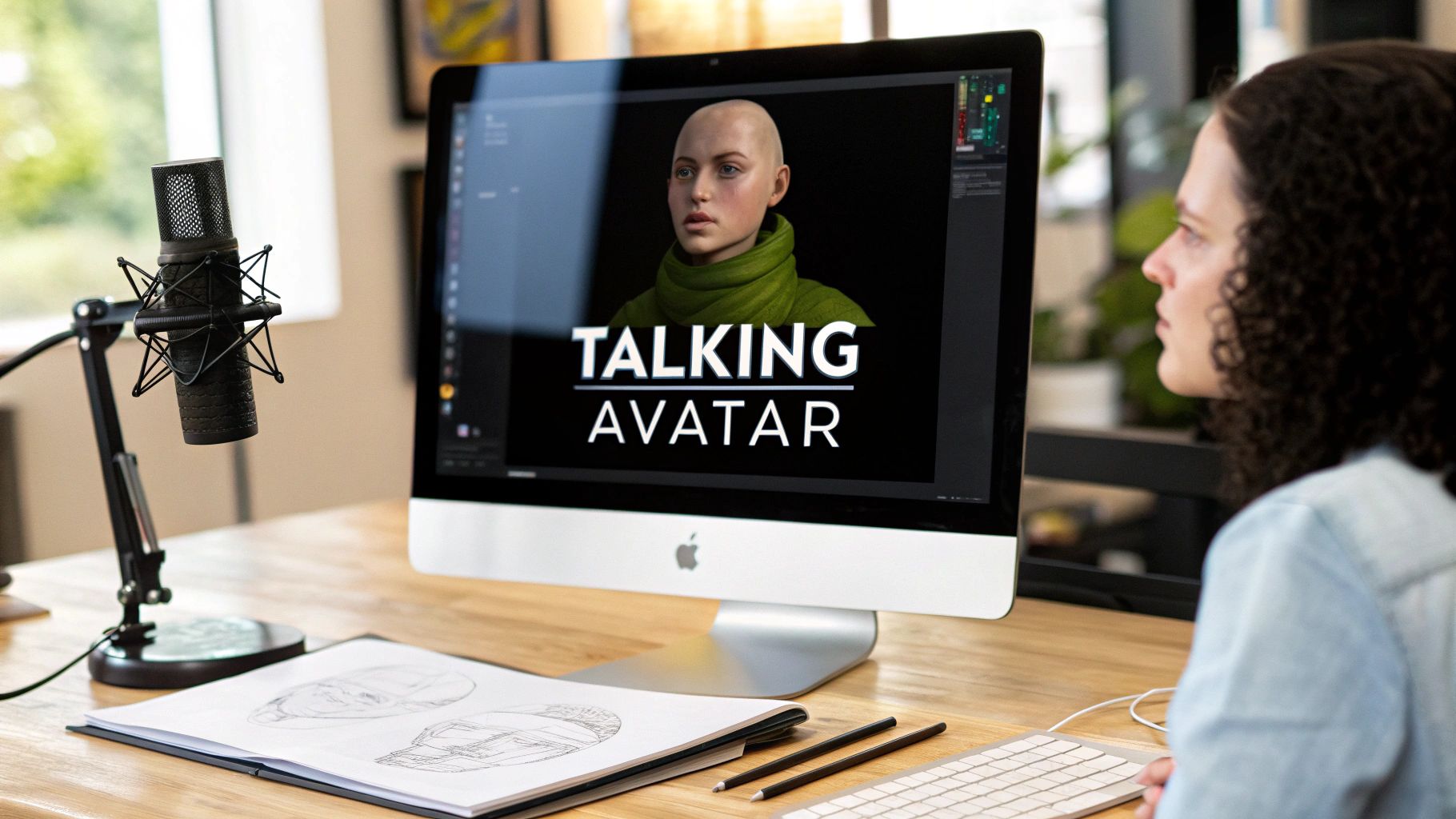
Diving into the world of talking avatars might sound incredibly technical, but you'd be surprised at how straightforward modern tools have made it. Platforms like Synthesia, HeyGen, and D-ID are designed to turn your script into a polished video in minutes, no video editing experience required. It's this ease of use that's really behind the explosion in their popularity.
Getting Started with Avatar Creation Tools
Picking the right platform from the get-go is the most important decision you'll make. What are you trying to achieve? Your answer will point you to the best tool. Creating buttoned-up corporate training videos is a completely different ballgame than making a quirky TikTok series or a helpful digital assistant for a website.
The market for this tech is absolutely booming. It was valued at around USD 9.78 billion in 2025 and is on track to hit a staggering USD 118.55 billion by 2034. That growth isn't just hype; it's driven by seriously smart algorithms that get better every day at mimicking human speech and emotion. If you're a data nerd, you can dig into the numbers in this detailed market research report.
Finding the Right Platform
Don't let the number of options paralyze you. The best way to find your fit is to get your hands dirty. Nearly every major platform offers a free trial or a freemium plan, so you can test-drive the core features without spending a dime. I always suggest signing up for two or three top contenders to see how they feel. Pay attention to the user dashboard, the quality of the stock avatars, and the voice options.
Here’s a quick look at some of the heavy hitters in the space.
As you can see, each one carves out a slightly different niche, whether it's for big businesses, solo creators, or developers.
My advice? Focus on the user experience during those trial runs. A clean, intuitive interface will save you a ton of headaches down the road. The goal is to feel like a creator, not a software technician.
Comparing Top Talking Avatar Creators
A side-by-side look at essential features from leading platforms can help you decide which tool best fits your creative or business needs.
| Feature | Synthesia | HeyGen | D-ID |
|---|---|---|---|
| Primary Use Case | Corporate Training & Marketing Videos | Social Media & Personalized Sales | API-driven & Real-time Avatars |
| Avatar Quality | High-end, photorealistic stock avatars | Wide range, including custom options | Strong focus on lifelike custom avatars |
| Voice Options | 120+ languages, custom voice cloning | 40+ languages, good accent variety | 119 languages, diverse voice styles |
| Custom Avatars | Yes, requires higher-tier plans | Yes, available on most paid plans | Yes, a core feature |
| API Access | Yes, for enterprise clients | Yes | Yes, a primary offering |
| Free Trial | Demo video only | Free plan with limited credits | 14-day trial with credits |
Ultimately, Synthesia is often the go-to for professional polish, HeyGen shines for creators needing flexibility, and D-ID is a favorite among developers who want to integrate avatars into their own apps.
Your First Steps After Signup
Okay, you’ve picked a platform and signed up. Now what?
Resist the urge to immediately try to create your masterpiece. Take five minutes to just click around the dashboard and get a feel for the layout. Find out where the essential tools live. For those who want to go deeper, our collection of guides for creators offers more advanced tutorials on related skills.
Before you do anything else, locate these three key areas:
- Avatar Library: This is your digital talent pool. Scroll through the pre-made avatars to get a sense of the platform's style. Do they look professional? Casual? Diverse?
- Text-to-Speech (TTS) Input: Find the text box where your script goes. Look for the dropdown menus to select different voices, languages, and accents.
- Basic Customization: See where you can make simple tweaks, like changing the background or adding a company logo.
Getting comfortable with these fundamentals first will make you much more confident when you're ready to tackle a more ambitious project.
Designing Your Digital Persona

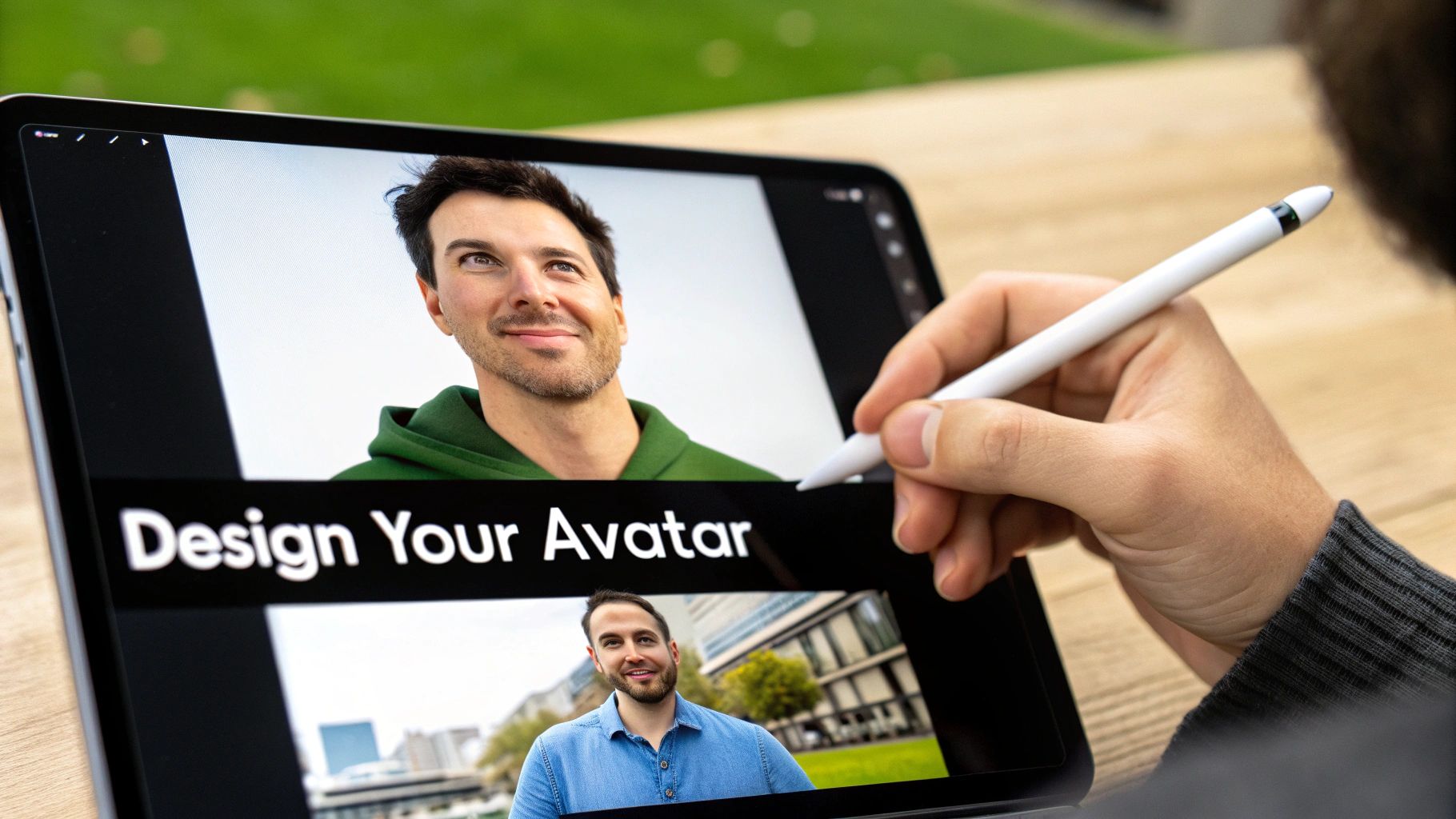
Alright, you've picked your tool. Now for the fun part: bringing your digital character to life. This is all about crafting a persona that doesn’t just look right, but feels authentic to your audience.
The quickest way to get started is often by turning a selfie into an avatar. It's wild how modern platforms can take one clear photo and generate a pretty accurate animated version of you. If you'd rather not use your own face, you can always start with a pre-made stock model and tweak it until it feels like your own creation.
Crafting a Unique Look
Think of your avatar as a digital actor—every little detail helps build their character. Don't just settle for the default settings. A simple change in hairstyle, a different outfit, or even a pair of glasses can completely shift the personality your avatar gives off.
You have to think about the context. A slick, professional suit and a minimalist background work perfectly for corporate training videos. But if you're running a casual vlog, that same look will feel stiff and out of place.
- Facial Features: Get in there and play with everything from eye color to the shape of the jaw. Tiny adjustments are what make a generic stock avatar feel like your avatar.
- Wardrobe: Pick outfits that actually fit the vibe you’re going for. Some of the more advanced tools even let you upload your own custom textures for clothing.
- Accessories: Don’t forget the small stuff. Glasses, earrings, or a hat can add a memorable touch and make your character stand out.
My personal tip is to create a simple "style guide" for your avatar. Decide on a core color palette and a few go-to outfits. This ensures consistency across all your videos, which is crucial for building brand recognition.
Giving Your Avatar a Voice
The voice is easily 50% of the equation. Maybe more. The right tone can build trust, get people excited, or deliver information with authority. Most platforms come with a solid text-to-speech (TTS) engine, giving you a huge library of languages and accents to choose from.
Spend some time experimenting with different TTS voices. Don't just grab the first one that sounds okay. Test a handful of them with a sample script to hear how they handle the kind of language and tone you normally use.
For a more personal and convincing feel, you have a couple of powerful options:
- Voice Cloning: This is a game-changer. You provide a short audio sample of your own voice, and the platform creates a synthetic, scalable version of it. It's perfect for maintaining that personal connection with your audience without having to be in front of a mic for every video.
- Audio Upload: If you want total control over the performance, just record your own voiceover and upload the audio file. The avatar creator will sync the lip movements to your speech, matching your exact pacing and emotion.
This is the kind of customization that separates amateur content from the pros. For anyone looking to build an entire brand from the ground up, you can find more ideas on how to create AI influencers that really grab an audience’s attention.
Ultimately, it’s the combination of a distinct look and the right voice that will make your digital persona truly work.
Getting the Voice and Animation Just Right
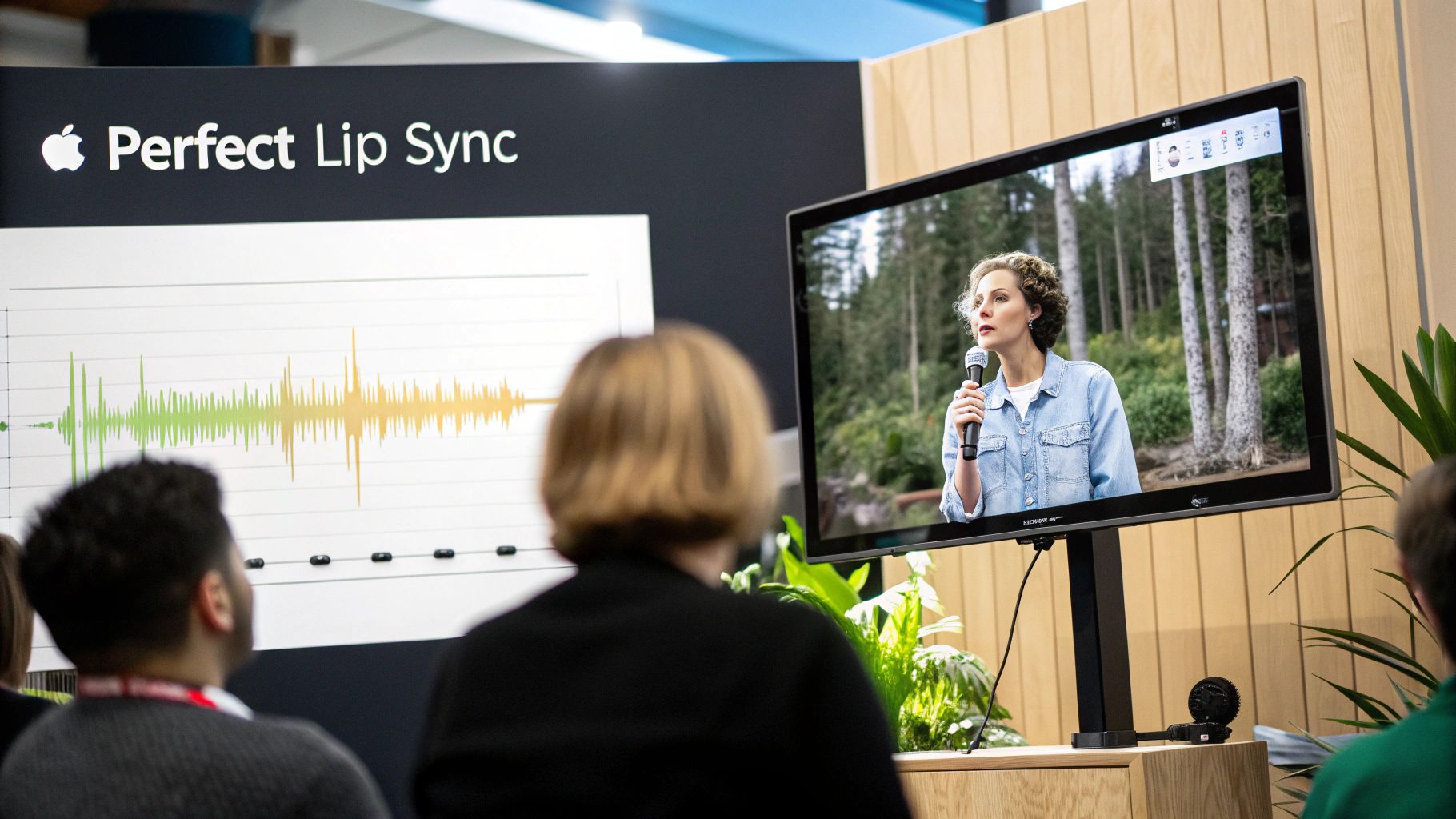
Having a cool-looking avatar is one thing, but making it talk believably is what sells the whole illusion. This is where a good talking avatar creator really proves its worth, taking your static design and breathing life into it.
The tech behind this is pretty clever. It’s all about algorithms that listen to the audio and break it down into phonemes—the tiny, distinct sounds that make up speech. The software then matches these sounds to the right mouth shapes (called visemes) to create lip movements that actually look right. A quality tool will handle this automatically, whether you’re typing in text or uploading your own audio file.
This kind of technology is a huge reason the digital avatar market is booming. It was valued at around USD 12.09 billion in 2024 and is expected to rocket to USD 125.41 billion by 2030. If you're curious, you can discover more insights about the digital avatar market and see just how fast it's growing.
More Than Just Moving Lips
Perfect lip-sync is a great start, but it won't fool anyone on its own. It's the little, non-verbal cues that make a character feel real. Without them, your avatar will feel stiff and end up deep in the uncanny valley.
Getting the timing perfect is essential. For anyone struggling with the technical side, there are some great guides on how to sync audio with video that can help you nail the fundamentals.
Most modern avatar platforms give you a library of subtle animations to add, and these make all the difference. They mimic the small things humans do without thinking.
- Head Nods and Tilts: Great for adding emphasis or showing that your avatar is listening.
- Eye Blinks: A randomized, natural blink rate is a must. A staring avatar is just creepy.
- Idle Gestures: Think small hand movements or a slight shift in weight during a pause. It breaks the "statue" look.
My Pro Tip: Less is more. Seriously, don't overdo the animation. The aim is to be subtle, not to have your avatar constantly twitching. I’ve found that a simple head nod on a key phrase has way more impact than non-stop movement.
Write Your Script Like a Director
The words you write aren't just for the voiceover; they're your avatar's performance guide. If you write with animation in mind from the start, your final video will be much more dynamic.
Try adding deliberate pauses into your script. These are perfect moments to trigger an animation—a thoughtful look, a slight smile, or a nod of agreement. This adds a layer of emotion that a flat reading just can't match.
For more ideas on building out content, I often check out the articles over on the https://createinfluencers.com/blog for inspiration. When you start thinking like a director, you can turn a simple talking-head video into something that truly connects with people.
Getting Your Video Out Into the World: Export and Optimization
You’ve put in the work to create a great persona and a killer script. Now it's time for the final, crucial step: exporting your video. This is where all that effort pays off in a polished final product, ready for any screen. A lot of people make the mistake of just hitting "export" with the default settings. Don't do that.
The same video that looks fantastic stretched across a YouTube monitor will get brutally cropped on an Instagram Story. Before you go anywhere near that export button, you have to know where your video is going to live. That single decision influences everything else, from aspect ratio to file size.
Match Your Format to the Platform
Every social media platform has its own quirks and preferred video dimensions. Nail this, and your video feels native and professional, which is a huge deal for engagement. A video that fits the screen just feels right to the viewer.
Think about it: a B2B marketing clip on LinkedIn will perform best as a square (1:1) or slightly vertical (4:5) video. But a detailed tutorial for your YouTube channel absolutely needs to be widescreen (16:9). Thankfully, most avatar tools have built-in presets for these, so you can usually just pick the right one from a menu.
- TikTok, Reels, & Shorts (9:16): This is non-negotiable for short-form vertical video. It takes up the whole phone screen, grabbing the attention of fast-scrolling users.
- YouTube (16:9): The undisputed king for long-form content. This widescreen format is what people expect on desktops, TVs, and even phones turned sideways.
- Instagram & Facebook Feeds (1:1 or 4:5): In the main feed, square and slightly vertical videos dominate. They simply occupy more of the screen as someone scrolls, making them harder to ignore.
My biggest piece of advice here: Don't just crop a widescreen video to fit a vertical format. Re-render it. When you crop a 16:9 video, you often lose important visual context. Rendering it natively in 9:16 keeps your avatar perfectly framed and makes the whole thing look intentional.
Your Pre-Export Quality Checklist
With your dimensions locked in, take a moment for one last quality check. It's shockingly easy to overlook small mistakes when you've been working on a project for a while. This quick review can save you the pain of having to re-render and re-upload.
I like to think of this as a pre-flight checklist. Running through these points ensures both the audio and visuals are as good as they can be.
- Check the Audio: Pop on a pair of headphones. Listen for any weird background hiss, muffled words, or sudden jumps in volume. Is the voice crisp and easy to follow?
- Scan the Visuals: Watch the video all the way through. Is the lighting consistent? Is the background clean, or is there something distracting you missed?
- Verify the Lip-Sync: This is the whole point of a talking avatar, right? Pay close attention to how the mouth moves, especially on trickier words. A good tool will get this right 99% of the time, but that 1% can be jarring if you miss it.
Taking just a couple of extra minutes for this final pass makes a world of difference. It ensures the video you share makes the best possible impression.
Putting Your Talking Avatar to Work
So you've designed your avatar and nailed its delivery. What now? This is where the real fun begins. A polished digital persona is a powerful tool, but its true value comes from putting it out there and getting it to work for you. The possibilities are huge, covering everything from corporate boardrooms to your social media feed.
For businesses, the biggest immediate wins are usually scale and consistency. Think about it: you could create an entire corporate training series in a dozen languages without ever booking a film crew or studio. Your avatar can deliver the same perfect presentation to one person or ten thousand, making sure everyone gets the exact same high-quality training. That's a game-changer.
The market certainly noticed this potential. By 2025, big names like Synthesia, HeyGen, and D-ID had already carved out a massive 27–30% of the talking avatar creator space. Synthesia, in particular, shot to the front of the pack by focusing on super-realistic avatars for corporate training and marketing videos. You can dig deeper into these market share findings on MarketsandMarkets.
Sparking Creativity for Content Creators
If you're a content creator, your avatar is basically your digital twin who never gets tired. It can host your tutorials, narrate product reviews, or even be the face of a brand-new YouTube channel. This completely frees you from the hassle of filming yourself, so you can pour all your energy into writing the perfect script.
Here are a few ideas to get you started:
- Social Media Shorts: Fire off a series of quick, punchy tips or fun facts for TikTok, Instagram Reels, or YouTube Shorts. To really nail this, you might want to check out tools like the shortgenius platform, which is built for creating engaging short-form video.
- Educational Content: Build out an entire online course with your avatar as the instructor. The consistent look and clear delivery are ideal for any learning environment.
- Building a Brand: Turn your avatar into your official digital spokesperson. It can announce new products, handle FAQs on your website, or star in animated ads.
The big secret here is that an avatar lets you separate the content from the creator. This is a huge advantage if you're a bit camera-shy or just want to build a brand that isn't tied directly to your face.
Exploring Innovative Use Cases
Beyond the obvious stuff, talking avatars are popping up in some really interesting places. They're becoming virtual influencers with their own dedicated followings, building communities and signing brand deals. In customer service, they’re acting as friendly, multilingual virtual assistants, ready to help customers 24/7.
The creators who really succeed are the ones who get creative and experiment. Could your avatar host a virtual event? Or maybe become a character in a webcomic or a video game? Thinking differently is what turns this from a neat tool into a serious asset.
And if you're thinking about turning this into a business, checking out our affiliate program is a great next step. It’s a solid way to earn by recommending the very tools you're using to build your digital presence.
Common Questions About Avatar Creators
Diving into the world of AI avatars usually sparks a ton of questions. As this tech weaves its way into our everyday lives, it pays to get a handle on the nuts and bolts—from creative freedom to the rules of the game. Let's tackle some of the things people ask most often.
One of the first questions I usually hear is about personalization, especially when it comes to the voice. People want to know if they're stuck with robotic-sounding options. The answer is a resounding no.
Can I Use My Own Voice with a Talking Avatar Creator?
Yes, you absolutely can, and it's one of the best ways to make your content feel genuine. Most solid avatar creation platforms give you a few different ways to handle the audio.
The quickest way is usually text-to-speech (TTS). You just type out your script, pick an AI-generated voice that matches your desired tone, and you’re good to go.
For a more personal touch, you can upload your own pre-recorded audio. This is fantastic because the AI analyzes your specific speech patterns—your pauses, your emphasis, your unique cadence—and syncs the avatar's lip movements to match it perfectly.
Then there's the most powerful option: voice cloning. You provide a short recording of your own voice, and the AI builds a synthetic model of it. From that point on, your cloned voice can read any script you type, keeping your unique sound across unlimited videos without you having to record a single new line. It's a game-changer.
Are There Legal and Ethical Rules for AI Avatars?
Definitely, and this is an area you need to pay close attention to. On the legal side, the big rule is you must have the rights to any face or voice you use. You can’t just create an avatar of your favorite actor without their permission—that would be a major violation of their publicity rights.
The same goes for voice cloning. You need clear, explicit consent from anyone whose voice you want to replicate. Ethically, it all boils down to one word: transparency.
It's widely considered best practice to disclose when an audience is interacting with an AI, especially in sensitive areas like customer service or journalism. This prevents deception and builds trust with your audience.
Every reputable platform will have terms of service that explicitly forbid creating hateful, deceptive, or misleading content. The golden rule is simple: use this powerful tech responsibly and with respect for others.
How Can I Make Money with a Talking Avatar Creator?
Turning your AI avatar content into cash is more straightforward than you might think. There are a few well-worn paths to generating some real revenue.
- For Businesses: Companies are using avatars to scale their video production for marketing campaigns, product demos, and internal training. It cuts down on traditional video costs and makes it incredibly easy to update content or translate it for different markets.
- For Content Creators: You could launch an entire YouTube channel hosted by your AI avatar and monetize it through ad revenue. Another proven strategy is creating and selling online courses with your tireless AI instructor as the face of the program.
- Freelance Services: The demand for avatar video creation is booming on platforms like Upwork and Fiverr. You can sell your skills to businesses and individuals who need quality video content but don't have the time or technical skills to do it themselves.
- Affiliate Programs: Many of the best avatar creation tools have affiliate programs. If you're using a platform you love, you can recommend it to your audience and earn a commission for any new customers you send their way.
Ready to bring your own unique digital persona to life? CreateInfluencers gives you all the tools you need to design, customize, and deploy stunning AI influencers and talking avatars in minutes. Start creating for free today!