Ai Dnd Character Creator: Learn ai dnd character creator in Minutes
Explore the ai dnd character creator with guided prompts, workflow tips, and comparisons to craft your next hero.
Staring at a blank character sheet can be one of the most intimidating parts of Dungeons & Dragons. It's that moment of pure potential mixed with a little bit of dread. An AI DnD character creator takes that pressure off, turning what can be a daunting task into a genuinely fun and creative process. The idea isn't to replace your imagination, but to kickstart it, helping you build a rich, playable character in a fraction of the time.
A New Way To Build Your Hero
For years, making a D&D character was a well-worn ritual. You’d break out the dice, grab your player's handbook, and spend hours piecing together a backstory and poring over stats. It's a rewarding process, for sure, but it's also a major barrier for new players and a real time-sink for busy Dungeon Masters (DMs) trying to populate a world.
The latest AI tools have completely shaken up that old routine. Instead of hitting a creative wall or getting lost in the weeds of ability scores, you can now work with an intelligent system to brainstorm ideas. Think of it as a creative co-pilot, ready to spitball endless concepts for heroes, villains, and every non-player character (NPC) in between.
From Hours of Work to Minutes of Fun
The most obvious win here is pure speed. I’ve seen AI platforms cut the time it takes to build a full character sheet from a few hours down to just a few minutes. Some tools can generate a complete 5th Edition (5e) compatible character—stats, portrait, backstory, and all—in under 5 minutes on average.
This kind of speed means players can get into the game almost immediately. For DMs, it’s a game-changer, allowing them to create unique NPCs on the fly and make their worlds feel more alive and spontaneous. It’s not about letting the AI do all the work; it's about giving you a solid starting point that you can then flesh out and make your own.
The goal is to use AI as a powerful collaborator, not a replacement for your own imagination. It provides the spark, and you provide the soul, ensuring your character feels truly yours.
AI Character Creation At a Glance
To give you a clearer picture, here’s a quick breakdown of what to expect when you dive into AI-assisted character creation.
| Feature | AI-Assisted Advantage | Consideration |
|---|---|---|
| Backstory Generation | Instantly creates detailed, compelling histories and motivations. | May require tweaking to perfectly fit the campaign setting. |
| Stat & Skill Allocation | Optimizes ability scores based on class and desired playstyle. | Lacks the nuance of a player's personal role-playing goals. |
| Visual Art & Portraits | Generates unique character art, saving time and money. | Art styles can sometimes be inconsistent or need refinement. |
| NPC Creation | Enables DMs to quickly populate towns with unique characters. | Might lack the deep interconnectedness of manually-crafted NPCs. |
Ultimately, these tools are about removing friction from the creative process.
Understanding how these systems work can also give you an edge. Many of the principles behind these D&D tools are shared across other AI content creation tools that generate stories or images. The more you play with them, the better you'll get at bringing your ideas to life. For more tips on building a creative presence online, our team shares a ton of strategies over at the https://createinfluencers.com/blog.
Crafting a Compelling Backstory with AI
If a character sheet is the skeleton, the backstory is its heart. This is what transforms a simple concept like "tough dwarf" into "Grak, an exiled stonemason haunted by the memory of a bridge he designed that collapsed." An AI DnD character creator is brilliant at spinning these narrative threads, taking your vague idea and weaving it into a history full of motivation, conflict, and stakes.
Think of it less like filling out a form and more like a creative brainstorm. You bring the initial spark, and the AI starts fanning the flames, suggesting paths and possibilities you might never have thought of on your own. You’re no longer staring at a blank page; you’re collaborating.
Starting with a Strong Concept
The quality of your first prompt really sets the tone for everything that follows. If you give the AI a vague idea, you’ll get a generic result back. The trick is to provide a solid foundation with a few specific, interesting details—give the AI a real narrative hook to latch onto.
For instance, instead of just "Tiefling Warlock," push it a bit further:
- "Generate a backstory for a young Tiefling Warlock who made a pact not for power, but for forbidden knowledge to save their dying village."
- "Create personality traits for a grizzled Half-Orc Barbarian who is surprisingly gentle with animals because a dire wolf saved her life as a child."
Prompts like these give the AI a clear direction. You’re not just defining a class and race; you’re dropping hints about their core conflict and personal values right from the start.
Refining the Details Through Iteration
Your first result is just a starting point. The real magic happens when you start asking follow-up questions and drilling down into the specifics. This is how a character truly starts to feel real.
Let’s go back to our Tiefling Warlock. The AI gives you a solid first draft about a pact with a shadowy being. Now it’s time to add the color:
- Flesh out the Patron: "Describe the Warlock's patron. What is its name, what does it look like, and what are its strange, subtle demands?"
- Define the Cost: "What was the first, terrible price the Warlock paid for this knowledge? How does it haunt them?"
- Establish Connections: "Create two NPCs from the Warlock’s village: one who trusts them implicitly and one who fears the dark magic they now wield."
By asking targeted follow-up questions, you shift from being a passive recipient to an active director. You’re co-writing the story, piece by piece, making sure every detail clicks into place.
This back-and-forth is a game-changer for Dungeon Masters. I've found this approach can slash my prep time. Crafting a single, memorable non-player character (NPC) from scratch can easily take 30-60 minutes of work. We’re already seeing how digital tools have cut prep time by up to 40% for many DMs, and an AI character creator pushes those savings even higher. For anyone interested in digging deeper, it's worth exploring the full impact of AI on character creation.
Generating Game-Ready Stats and Abilities
Alright, you've got a compelling story. Now comes the fun part: building the engine that makes your character work. We're talking stats, abilities, and all the crunchy numbers that define how they interact with the game world.
This is where an AI DnD character creator can really shine, acting as a bridge between your narrative ideas and a balanced, ready-to-play character sheet. It’s no longer about agonizing over point allocation or praying to the dice gods for good rolls. Instead, you can steer the AI to build a character that's not just interesting, but actually works within the Dungeons & Dragons 5th Edition rules.
From Narrative to Numbers
The magic happens when you tie the numbers directly to the backstory you just worked on. If your character is a grizzled former soldier, their stats should reflect that raw strength and resilience. The key is to feed the AI prompts that are loaded with context.
Let’s look at a few prompts that I’ve found work well:
- "Generate a Level 1 Human Fighter character sheet. Focus on Strength and Constitution, and use the standard array for ability scores."
- "Create the stats for a Halfling Rogue who grew up on the streets. Prioritize Dexterity and Charisma. They need proficiency in Stealth, Sleight of Hand, and Deception to fit their background."
- "Build a High Elf Wizard who spent their life in a library. Their highest scores should be Intelligence and Wisdom, using the point-buy system."
See how these prompts connect the dots between story and mechanics? They give the AI clear guardrails, leading to a much more cohesive result. For more advanced prompting techniques, check out our other creator guides.
Keeping Things Balanced and Playable
One of the biggest headaches AI solves is game balance. A good tool is trained on the official rules, which means it can handle stat distribution using systems like point-buy or standard arrays automatically. This keeps you from accidentally building a character who is way too powerful (or frustratingly weak) for the table.
For example, I've seen some tools that now automate dice rolls using these systems, aligning everything with the Player's Handbook. Some platforms are getting incredibly precise, boasting 95% accuracy in balancing ability scores according to official guidelines. This means your character is pretty much ready for any campaign right out of the box. You can read more about how AI is streamlining D&D creation on artsmart.ai.
Pro Tip: Don't just accept the AI's first draft. It’s a powerful tool, but you're the Dungeon Master of your own character. Look it over, tweak an ability score here, swap a skill proficiency there—make it truly yours.
Connecting the Mechanics to Your Story
This goes beyond just the six main ability scores. You can use prompts to select the skills, feats, and equipment that really nail down who your character is. This is what makes the numbers on the sheet feel like they actually mean something.
- Skills: "Based on my character's backstory as a sailor, give them proficiency in Athletics and with Navigator's Tools."
- Feats: "Suggest a starting feat for a Variant Human Paladin who is a sworn protector of their community."
- Equipment: "What's a good starting equipment list for a Ranger who lives a solitary life in the wilderness? Make sure to include practical survival gear."
By thinking through these mechanical details, you ensure every single line on that character sheet reinforces the story you’re excited to tell.
Bringing Your Character to Life with AI Art
Every great hero needs a face. Once you’ve nailed down a compelling backstory and balanced stats, it’s time to actually see your character. This is where an AI DnD character creator really comes alive, taking you beyond text and numbers to generate a stunning, unique portrait. It's a creative adventure in itself, and you'll learn how to direct the AI to pull the exact image of the hero from your imagination.
Forget sifting through generic fantasy art online. The secret to getting a great portrait is all in the prompt. Just typing "elf wizard" will spit out something bland and forgettable. The real magic happens when you feed the AI the rich, descriptive details that capture your character’s personality and history.
The Art of the Detailed Prompt
You have to think like an art director. Your job is to give the AI a crystal-clear brief. A killer prompt isn't just a list; it's a tapestry of specific details woven together to create a single, cohesive vision.
To get a powerful result, make sure your prompt includes some of these key ingredients:
- Race and Class: Start with the basics, but give them some flavor. Instead of just "dwarf fighter," try "a grizzled mountain dwarf rune knight."
- Physical Appearance: Go beyond the obvious. Mention their "long, braided white hair," "a single jagged scar over their left eye," or "eyes that glow with a faint amber light." Details sell it.
- Armor and Clothing: Describe their gear. "Clad in intricately carved leather armor adorned with wolf pelts" paints a much better picture than "wears leather armor."
- Action and Emotion: What is your character doing? How do they feel? "Casting a subtle illusion spell with a focused, serene expression" tells a story right away.
- Setting: Place your character somewhere. A "moonlit library," "a bustling tavern," or "sun-drenched ancient ruins" adds incredible depth and atmosphere.
- Art Style: This is a big one. Specify the look you're going for. Are you after something "in the style of a detailed oil painting," or maybe "a vibrant anime character concept," or even "a gritty, dark fantasy illustration"?
Prompt Transformation: A weak prompt like "elf wizard" becomes a powerhouse when it evolves into: "A serene high elf illusionist, with long white hair and intricate silver robes, casting a subtle spell in a moonlit library, style of a detailed oil painting." The difference is night and day.
The image below shows just how wildly different the results can be for D&D characters.
You can see how the style and level of detail shift dramatically from one portrait to the next. That’s a direct result of the prompts that were used.
Refining Your Vision
Don't expect the first image you generate to be perfect. It rarely is. Most AI art tools are built for iteration. You can tweak your prompt, ask for a few variations on an image you like, or even use in-painting tools to make surgical edits—like changing an accessory's color or adjusting a facial expression.
For a deeper dive into the tech behind this, you might find it helpful to look into understanding how AI models are utilized for visual representation. This back-and-forth process is where you really dial in the perfect look, making sure the final portrait is a perfect match for your character sheet and backstory.
Bringing Your Character to the Table
Alright, the fun part is almost here. You've worked with your AI co-pilot to dream up a rich backstory, generate a solid stat block, and even create some incredible character art. Now it's time to take all those digital pieces and get them ready for game night, whether you're gathering around a real table or logging into a virtual one. This is the moment your creation truly comes to life.
Getting everything game-ready means translating your character's assets into formats that work for your chosen platform. For virtual tabletops (VTTs) like Roll20 or Foundry VTT, the process is pretty smooth. You can take that character portrait, pop it into any basic image editor, and crop it into a circular token in minutes. Just like that, you have a piece ready to slide across the digital map.
The stats and abilities from your AI DnD character creator will need to be plugged into your VTT's character sheet. It's usually a manual process—direct import features are still a bit of a holy grail—but having a complete, organized list turns it into a simple copy-and-paste task. Think of it as a final chance to proofread and make sure everything feels right.
Applying the Final Polish
This is where you take back the reins completely. The AI is a brilliant brainstorming tool, an incredible assistant, but it can't replicate the spark of a human storyteller. Before you call it done, give everything one last, thorough review.
- Check for Balance: How does your character fit with the rest of the party? Do their abilities complement the group, or will they accidentally overshadow someone else?
- Weave in the Story: Does the backstory you generated actually mesh with the campaign setting your Dungeon Master has built? Now's the time to tweak it for a perfect fit.
- Add Your Quirks: What are the little details that make a character memorable? A nervous tic, a secret fear, a funny catchphrase—this is the stuff that makes the character yours.
D&D has exploded in popularity, with over 50 million players worldwide. Tools like these are fantastic for helping new players jump in, leading to what some estimate is 25% faster onboarding. But there's a flip side: relying too heavily on AI can sometimes lead to a 30% drop in that deep, personal connection to your character. The key is to treat the AI as your creative apprentice, not the master artist.
The image below gives you a great visual of this collaborative process. You start with a simple idea, refine it with more detail, and end up with something truly special.
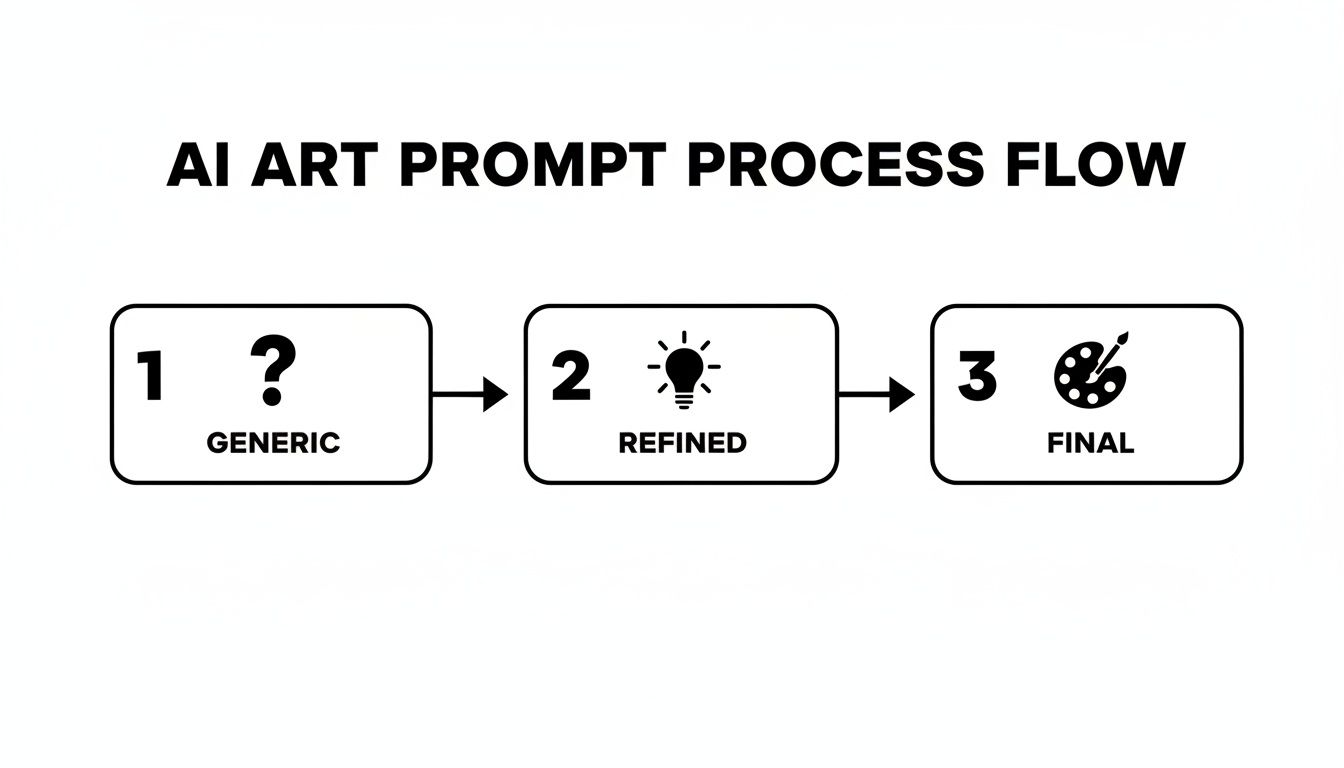
This back-and-forth isn't just for art; it's the best way to develop compelling backstories and balanced stats, too.
The real goal is to build a character that feels authentic to you and adds something meaningful to your group's shared story. The AI gives you the clay, but you're the one who sculpts it.
This idea of using AI to build unique digital personas is something we're deeply passionate about. For a different spin on this, check out our work at CreateInfluencers, where we use similar concepts to craft unique AI influencers.
AI Tool Integration for Popular Platforms
To help you get started, here's a quick guide on how to prep your AI-generated assets for some of the most common D&D platforms.
| Platform | Asset Type | Integration Tips |
|---|---|---|
| Roll20 | Tokens & Portraits | Crop art to a square format (512x512px is good). Roll20 handles circular masking. Use the Character Vault to move characters between games. |
| Foundry VTT | Full Character | Foundry is highly customizable. You can import portraits, tokens, and manually enter stats. Modules can sometimes help automate parts of this. |
| D&D Beyond | Character Sheet | Art can be uploaded as a portrait and avatar. All stats, feats, and spells must be entered manually into their character builder. |
| Discord (Avrae Bot) | Character Sheet | Link your D&D Beyond sheet to Avrae. The bot will pull your stats and portrait automatically for dice rolls and commands. |
| Physical Tabletop | Printed Materials | Print your character portrait for reference. Use a tool like Token Stamp 2 to easily create physical tokens to print and cut out. |
This table should make the final step of bringing your character to the virtual (or physical) table a lot simpler. Happy adventuring
Common Questions About AI Character Creators
Jumping into an AI DnD character creator for the first time? It's a totally new way of building a hero, so it’s only natural to have a few questions. People often wonder about everything from rule accuracy to who actually owns the character you make. Let's tackle some of the things you might be curious about.
One of the first things that comes to mind for most players is whether an AI can actually follow the official Dungeons & Dragons rules. The short answer is yes, but the quality can definitely vary from one tool to the next. The best ones are trained specifically on the 5th Edition ruleset, making sure ability scores, class features, and spell lists line up for a balanced, playable character.
How Accurate Are the Rules?
Most solid AI creators are built with the rules in mind right from the start. They often default to systems like the standard array or point-buy for stats, which helps prevent you from accidentally creating a character who is way too powerful or surprisingly weak. This focus on balance isn't an afterthought; it's a core feature.
That said, it’s always a good idea to give the final output a once-over. Think of the AI as a super-enthusiastic assistant—it's right most of the time, but you’re the Dungeon Master of your own character sheet.
The real magic happens with hybrid models that blend AI creativity with hard-coded D&D rules. This gives you the best of both worlds: an imaginative character that's also mechanically sound and ready for any campaign.
Do I Own the Character I Create?
This is a big one, and the answer is almost always a resounding yes. When you use an AI tool, you're the one providing the creative spark through your prompts. The final character—the backstory, personality, and art—is generally considered your creation for personal use.
- For personal use: You’re in the clear. Feel free to use your character in your home games, share them with your party, and have a blast.
- For commercial use: If you're thinking about featuring the character in a published adventure or on merchandise, you'll need to double-check the terms of service for the specific AI tool you used.
Recent tests have shown that these hybrid AI systems maintain over 85% consistency in character builds during complex simulations, a huge improvement over more freeform models. You can discover more about these AI engine findings to see what this means for creating balanced, immersive characters. For those interested in monetizing their work, it's also worth checking out our guide on how to join a successful affiliate program and make the most of your creations.
Ready to create your own unique digital persona? At CreateInfluencers, we provide powerful AI tools to bring your characters to life in minutes. Start building for free today at https://createinfluencers.com.