How to Make Money with AI a Practical Guide
Learn how to make money with AI using proven strategies. Our guide covers AI influencers, content creation, and monetization tactics that actually work.

The most straightforward way to start making money with AI is by creating and selling digital assets. Think about it: you can build entire income streams by launching AI influencers on social media or setting up automated content channels that run themselves. This approach lets you turn creative sparks into real revenue, and you don't need a degree in computer science to do it.
Exploring Real AI-Powered Income Streams

Let's cut through the noise and look at how people are actually earning with AI right now. The conversation is no longer about some far-off future—it’s about practical applications you can start today. Thanks to a new wave of accessible tools, opportunities once reserved for tech insiders are now open to anyone with a good idea.
This guide is your roadmap. We're going to focus on a powerful and proven strategy: creating AI influencers and building automated content channels. This isn't just a fleeting trend; it’s a smart response to a major economic shift.
Before we dive deep, let's get a high-level view of the most effective ways to generate income with AI. This table summarizes the key models we'll be exploring, giving you a quick snapshot of what's possible.
Top AI Monetization Models at a Glance
| Monetization Model | Potential Income | Required Skill Level |
|---|---|---|
| AI Influencers & Sponsorships | $500 - $10,000+ per month | Beginner to Intermediate |
| Automated Content Channels | $200 - $5,000+ per month | Beginner |
| Affiliate Marketing | $100 - $3,000+ per month | Beginner to Intermediate |
| Digital Product Sales | Varies widely (e.g., $500 - $2,000+ per month) | Intermediate |
Each of these avenues offers a unique way to turn AI tools into a revenue-generating engine. Now, let's unpack the "why" behind this opportunity.
The Economic Engine Behind AI Monetization
The buzz around making money with AI is backed by some seriously big numbers. Projections show AI technology could generate up to $15.7 trillion in global revenue by 2030, with the potential to boost local economies' GDP by 26%. This growth is fueled by massive investment—exploding from $15.26 billion in 2015 to a staggering $130.26 billion in 2024. If you want to dig into the data, Exploding Topics has a great AI statistics report.
All this money pouring into the industry creates a perfect environment for new income streams to flourish. As more businesses and people adopt AI, they create a huge demand for AI-generated content, virtual personalities, and automated services.
The key isn't just knowing that AI is a big deal; it's understanding how to position yourself within this growing ecosystem to capture a piece of the value being created.
Your Path to AI-Driven Income
So, where do you start? The most direct route is to create digital assets that you can monetize through different channels. Instead of trading your time for a paycheck, you build something that can earn money on its own.
Here are the core opportunities we're going to walk through:
- AI Influencer Creation: This involves building a virtual personality on a platform like Instagram or TikTok. The goal is to grow a loyal following that eventually attracts brand sponsorships and partnerships.
- Automated Content Channels: You can use AI to churn out videos, articles, or social media posts at a scale that would be impossible for a human. These channels are typically monetized through ads, affiliate marketing, or subscriptions. For some great examples, check out these 9 profitable faceless YouTube channel ideas.
- Digital Product Sales: Think about designing and selling AI-generated art, e-books, or custom guides. You can tailor these products to a specific niche audience that's hungry for unique content.
Each of these paths uses AI to do the heavy lifting, freeing you up to focus on the bigger picture—strategy, creativity, and growth.
Designing Your First AI Influencer Brand
Before you generate a single image, you need to think like a brand strategist. An AI influencer is a digital asset, and its success hinges on a solid foundation. This is the crucial step where a cool idea transforms into a marketable concept that brands will actually pay to work with.
I’ve seen so many people make the same mistake: they create a generic, attractive character without any real purpose. To actually make money with this, your influencer needs a sharp, distinct identity that clicks with a specific, monetizable audience. A random "fashion model" gets lost in the noise. An AI influencer dedicated to "upcycled retro-tech fashion," however, already has a built-in audience and obvious brand partnership potential.
Finding a Profitable Niche
Your first big decision is picking a niche. And don't just go with something you think is cool; you have to choose a market with proven commercial viability. The sweet spot is where audience passion and purchasing power overlap. You need to know who you're trying to attract and what brands are desperate to reach them.
Here are a few high-potential niches to get you thinking:
- Sustainable Living: This is more than just a trend. An influencer focused on eco-friendly products or zero-waste lifestyles can partner with countless ethical brands. This audience is incredibly engaged and values authenticity above all else.
- Niche Wellness: Forget generic fitness. Carve out a space in a specific area like biohacking, mindful tech, or even holistic pet wellness. These communities are full of early adopters willing to invest in specialized products.
- Retro Tech and Gaming: Nostalgia is a powerful draw. Imagine a persona who reviews classic video games or restores vintage electronics. This attracts a die-hard fanbase with disposable income for their hobbies.
Once you’ve locked in a niche, it's time to build a persona that lives and breathes it. This means crafting a detailed backstory, a clear personality, and a consistent visual style that speaks directly to that audience.
Building a Core Brand Identity
A truly memorable AI influencer has a story. It’s this narrative that allows an audience to form an emotional connection, which is the real currency of influence. Your character’s backstory will inform their personality, their values, and every piece of content they create.
A compelling backstory is your unique selling proposition. It’s what separates a memorable digital icon from a forgettable AI-generated image. It justifies their existence and gives brands a reason to believe in their story.
Let's take our sustainable fashion influencer. Their backstory could be that they're a "digital archivist from the future, sent back to rediscover and preserve timeless, sustainable styles." This simple narrative immediately sets the tone. It explains their look, their mission, and why they post what they post. Suddenly, you have a clear framework for everything.
To define your brand identity, you need a few key components:
- Unique Value Proposition (UVP): What makes your influencer different? Nail this down in a single sentence. For our example, it might be: "Your guide to a stylish, sustainable future, inspired by the past."
- Personality Traits: Is your influencer witty and sarcastic, or inspiring and serene? List 3-5 core personality traits that will guide every caption and interaction. Consistency here is what makes a character believable.
- Visual Aesthetic: You need a strict visual language. This covers everything from color palettes to photo styles (e.g., moody and cinematic vs. bright and airy) and fashion choices. A consistent look makes your feed instantly recognizable.
Platforms like CreateInfluencers are designed to help bring this vision to life. Their detailed character creation tools ensure your visual output always stays true to your core brand strategy.
Establishing Your Content Pillars
Finally, you have to translate that brand identity into a concrete content plan. Your content pillars are the 3-4 main topics your influencer will consistently post about. They keep your content focused, provide real value to your audience, and align perfectly with your monetization goals.
For our sustainable fashion archivist, the pillars could look something like this:
- Eco-Brand Spotlights: Featuring and reviewing sustainable fashion brands (a direct path to affiliate income and sponsorships).
- Styling Vintage Finds: Showcasing how to style thrifted or vintage clothing (builds authority and community).
- DIY Upcycling Projects: Tutorial-style content showing how to give old clothes new life (great for engagement and shares).
- Behind the Code: Occasional "behind-the-scenes" posts explaining their "mission" as an AI (builds a layer of transparency and trust).
These pillars create a content mix that’s predictable enough to build a following but varied enough to stay interesting. They give you clear direction and show potential brand partners exactly what you’re all about. With this strategic framework in place, you’re no longer just creating pretty images; you’re building a profitable digital brand.
Bringing Your AI Persona to Life with Modern Tools
https://www.youtube.com/embed/fBAJZPOTp4s
Alright, you've got your brand strategy nailed down. Now for the fun part: moving from concept to creation. This is where we get our hands dirty with today's powerful AI tools to generate the visuals and voice that will define your AI influencer. And don't worry, you don't need a background in graphic design or coding. These platforms are built for people like us.
Our goal here isn't just to make a few pretty pictures. We're building a cohesive visual identity that people will recognize instantly and a personality that feels real. I'll walk you through the practical steps of prompt engineering—making sure your character looks the same in every single post—and how to use language models to write captions that actually connect with an audience.
Mastering Visual Consistency with Prompt Engineering
The single biggest hurdle in creating a believable AI influencer is visual consistency. If your character's face or hair color changes from one post to the next, the illusion is shattered. You lose credibility, and your audience loses trust.
The secret to nailing this is all in the prompt.
Think of your prompt as a detailed creative brief you're giving the AI. The more specific and consistent your instructions, the more consistent your results will be. It all starts with creating a "base prompt" that you'll reuse and tweak for every single image you generate.
This base prompt is your character's digital DNA. It contains the core details that should never change.
- Fixed Physical Traits: Get super specific. Think "hazel eyes with golden flecks," "a small scar above the left eyebrow," "long, wavy auburn hair," or "athletic build, 5'9" tall."
- Recurring Style Elements: What's their signature look? Maybe they "always wear a silver locket necklace" or prefer "minimalist, neutral-toned clothing."
- Artistic Direction: Set the mood. Use terms that a photographer would understand, like "shot on Portra 400 film," "cinematic lighting," "soft, natural morning light," or "vibrant, high-contrast editorial style."
By starting every single generation with this foundational block of text, you anchor the AI to your character's specific look. This drastically cuts down on the weird variations you can get between images.
Crafting a Believable Voice with AI Text Generation
Your influencer's look is only half the battle. Their voice—the personality in their captions, comments, and DMs—is what turns followers into a real community. This is where AI language models become an incredible co-writer, helping you keep the tone consistent and engaging.
First, jot down a simple "style guide" for your influencer's voice. Are they witty and sarcastic? Thoughtful and inspiring? Do they use slang? Document these traits.
Then, you feed this guide into your AI text tool along with your post idea. Don't just say, "Write an Instagram caption about a new coffee shop." That's way too generic.
Instead, try something like this:
"Write a short, witty Instagram caption in the voice of a cynical but charming 25-year-old artist. The topic is a new, overly trendy coffee shop. Mention the oat milk latte but make a sarcastic comment about the price. End with a question to engage followers."
See the difference? This level of detail ensures the AI spits out something that actually sounds like your character, not just generic marketing copy. For more in-depth strategies on content, you can dig into our other tutorials over in the CreateInfluencers guides section.
Choosing the Right Tools for the Job
The number of AI tools is exploding, which is great news for us. You have a ton of options, and many are surprisingly easy to use. The trick is finding platforms that give you high-quality, consistent results without a steep learning curve.
Here’s a quick breakdown of what you'll need in your toolkit:
| Tool Category | What It Does | Why You Need It |
|---|---|---|
| Image Generators | Creates still images from text prompts | This is your bread and butter—the core tool for producing all of your visual content. |
| Text Generators | Crafts captions, bios, and responses | Develops and maintains a consistent, authentic voice across all your platforms. |
| Scheduling Tools | Automates when your content gets posted | Keeps your content flowing steadily, which is absolutely crucial for audience growth. |
The massive growth in this space shows just how big the opportunity is. The global AI market was valued at about $638 billion in 2025 and is expected to skyrocket to around $3.68 trillion by 2034. That incredible growth, with a compound annual rate near 19.3%, means there's a huge demand for what you're creating. You can check out more on these artificial intelligence market trends if you like to geek out on the numbers.
Pro Tip: Don't feel locked into a single tool. I often use one platform for generating the character's face because it's great with consistency, then switch to another for creating interesting backgrounds or scenes. A flexible workflow is your best friend.
Ultimately, bringing your AI persona to life is a cycle of creating, testing, and refining. Start with a solid plan, get really good at writing detailed prompts, and pick the tools that make the tech side feel easy. This is how you go from just playing around with AI to building a genuine digital asset that can actually make you money.
Growing an Engaged Social Media Audience
An AI influencer without an audience is just a folder of pretty pictures. If you're serious about making money with this, you have to turn that digital creation into a personality people actually want to follow. This isn't just about posting—it's about smart strategy, real community building, and sticking to a schedule.
Growing a following isn’t about hitting a vanity number. It's about building a genuine connection, even with a virtual character. That connection is exactly what brands are willing to pay for. Your job is to make people forget they're following an AI and start engaging with a persona they feel like they know.
Mastering the Instagram and TikTok Game
Instagram and TikTok are the natural habitats for AI influencers, but you can't treat them the same. Each platform’s algorithm is a different beast, and figuring out what they want is the only way you’ll get seen.
On Instagram, it's all about that polished, high-quality look.
- Tell a Story with Carousels: Don't just post a single shot. Create a mini-story with a "day in the life" carousel of 5-7 images. Mix up close-ups, full-body shots, and cool backgrounds. The more time people spend swiping, the more the algorithm loves you.
- Make High-Impact Reels: Keep them short and sweet (7-15 seconds) and jump on trending audio immediately. A quick Reel showing your AI influencer transitioning between different outfits will always outperform a static photo.
- Get Smart with Hashtags: You need a mix. Use big ones like
#AIinfluencer, but also get specific with niche tags like#RetroTechFashionor even location tags for the "places" your influencer visits. A good blend of high-traffic and low-competition tags is your ticket to discovery.
TikTok, on the other hand, is all about feeling real and entertaining. The vibe is less produced, more in-the-moment.
- Jump on Trends. Fast. Your AI influencer needs to be part of the conversation. That means using the popular sounds, filters, and challenges as they happen.
- Show Them the "Behind-the-Scenes": Pull back the curtain a bit. Create videos that show how you generated the latest look or adventure. People are fascinated by the tech, and that transparency builds a ton of trust.
- Use Stitch and Duet: This is a huge opportunity. Have your AI persona "react" to a viral video in your niche. It’s a brilliant way to tap into massive, already-engaged audiences.
Building a Community with Smart Engagement
Engagement is everything. A small, active community is infinitely more valuable than a huge, silent one. This is where AI tools can be your secret weapon, helping you manage all those interactions without losing that personal touch.
You can start by setting up automated responses to common comments, but give them personality. Instead of a boring "Thanks!", program your influencer's witty persona to say something like, "Glad you liked it! It took me 0.02 seconds to process that compliment."
The whole point is to make every single follower feel like they've been seen and heard. This isn't just a gimmick; it's how you build a loyal community that's truly invested in your character's journey.
Use the interactive features built right into the platforms. Run polls in your Instagram Stories asking followers to pick the next "travel" spot or outfit. Host Q&A sessions where you use AI to generate clever, in-character answers. This is how you turn passive lurkers into active fans. If you want to go deeper on brand building and content ideas, the CreateInfluencers blog has tons of great resources.
Scheduling Your Content and Collaborating for Growth
You have to be consistent. It's not optional. The algorithms push accounts that post regularly because it keeps people on their apps longer. If you post randomly, you're basically telling the algorithm to ignore you. Use a scheduling tool and plan your content at least a week out.
Here’s a simple cadence to aim for that you can actually stick with:
| Platform | Recommended Frequency | Best Content Types |
|---|---|---|
| 4-6 times per week | Reels, Carousels, Stories | |
| TikTok | 1-3 times per day | Short Videos, Trend Participation |
Finally, don't try to do this all on your own. Collaborations are one of the fastest ways to grow. Find other AI influencers or even human creators in your space and reach out. A simple collab, like having your character appear in a "photo" with another, can introduce your brand to a whole new, perfectly targeted audience. These partnerships build credibility and make your virtual persona feel like a real, integrated part of the social media world.
Monetizing Your AI Influence and Content
This is where the fun really begins—turning your creative work into actual income. You’ve brought your AI persona to life, given them a unique look and voice, and started building a community. Now it's time to build the engine that drives revenue.
The secret here is to stop thinking like an account owner and start acting like a media company. Relying on a single source of income is risky. Instead, we'll look at building a diverse portfolio of revenue streams, from simple affiliate deals to selling your own digital products. This approach creates a much more stable and sustainable business.
Affiliate Marketing and Brand Sponsorships
The most straightforward way to start earning money is through partnerships. This usually comes in two flavors: affiliate marketing and direct brand sponsorships. Both are built on the foundation of trust you've established with your audience.
Affiliate marketing is the perfect place to start. You team up with brands that fit your niche and earn a commission whenever someone buys something through your unique link. For instance, if your AI influencer is all about retro gaming, you could promote vintage-style controllers or modern remakes of classic titles.
- Find the Right Fit: Seek out brands your followers would genuinely appreciate. An authentic recommendation will always convert better than a random product plug.
- Integrate Naturally: Don't just drop links. Weave them into your content in a way that adds value, like creating a carousel post showing your influencer "using" the product.
- Track Everything: Use your analytics to see what's resonating. When you find a winner, double down on it.
Once you have some traction, direct sponsorships are the next logical step. This is when a brand pays you a flat fee for a dedicated post, Reel, or Story. To land these deals, you absolutely need a professional media kit.
Think of your media kit as your AI influencer's resume. It’s a clean, one-page document that showcases your audience demographics, engagement rates, and any past collaborations. This is what proves your value to potential partners.
When pitching brands, get specific. Avoid generic messages like, "Let's work together." Instead, propose a clear campaign idea that fits both their brand and your influencer's persona. Something like, "Let's create a 3-part Reel series showing how [Your AI Influencer] uses [Brand's Product] to achieve [Specific Outcome]."
A fantastic way to get started is by joining platform-specific affiliate programs. You can find great opportunities by exploring programs like the CreateInfluencers affiliate program at https://createinfluencers.com/affiliate, which lets you earn by promoting the very tools you might be using to build your empire.
Creating and Selling Your Own Digital Products
Why promote someone else's stuff when you can sell your own? This is where you can see much higher profit margins and build a stronger, more independent brand. All those AI-generated assets you've created are the perfect raw materials for digital goods.
Here are a few ideas to get you started:
- AI Art & Lookbooks: Package your best AI images into themed collections. An influencer focused on futuristic architecture could sell high-res digital prints or a curated "lookbook" of AI-designed spaces.
- Custom Prompt Guides: People are curious about how you do what you do. Sell a PDF guide that breaks down the exact prompts and techniques you use to get your influencer's signature look.
- Digital Planners & Templates: If your influencer’s niche is productivity or organization, design and sell branded digital planners that match their style.
The e-commerce world is embracing AI in a big way, and you can ride that wave. The market for AI e-commerce tools is expected to hit $16.9 billion by 2030, with 84% of businesses seeing AI as their top tech investment. This trend, which could drive profit increases of nearly 60% by 2035, signals a massive opportunity for selling digital products directly to your audience.
Expanding to Other Monetized Channels
Your AI influencer shouldn’t be confined to just one platform. You can take the character and assets you've already built and expand into a multi-channel media presence. Each new channel is another potential stream of income.
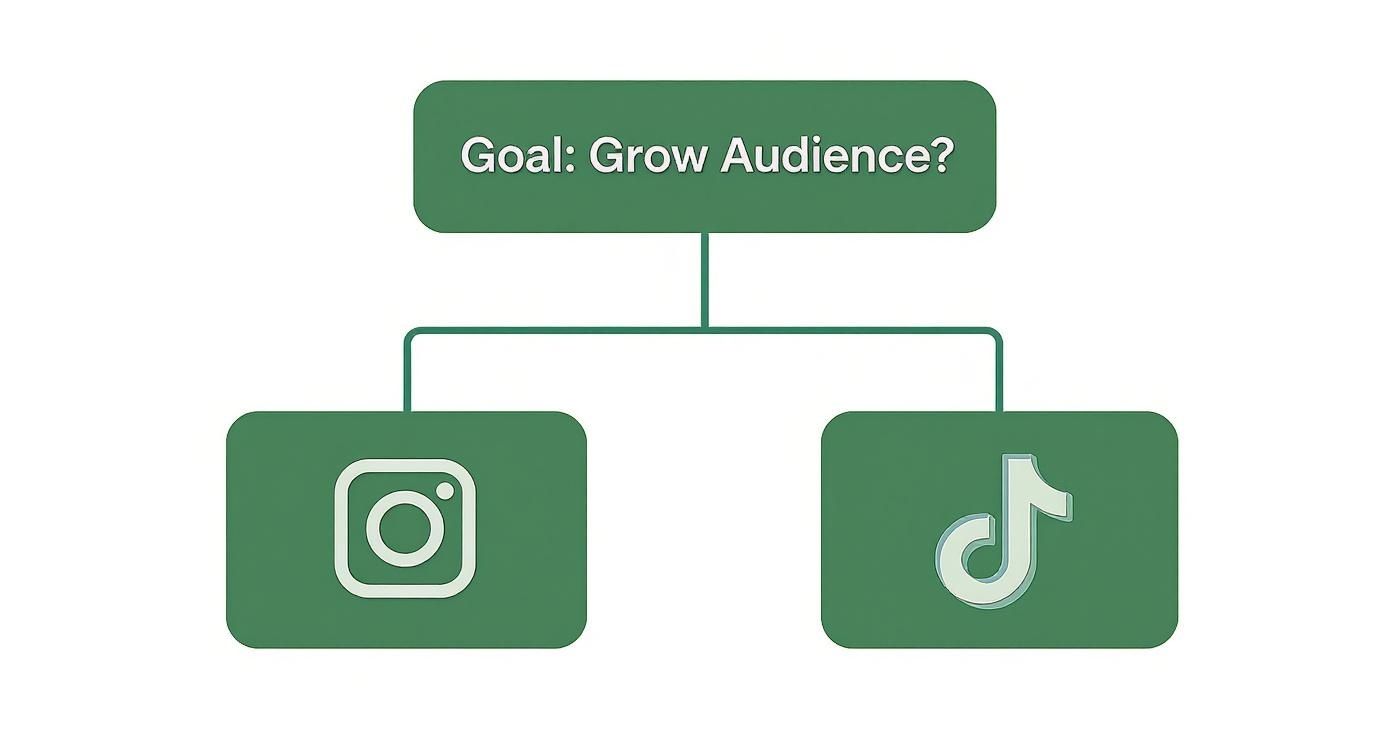
This visual gives you a simple way to think about platform expansion, contrasting Instagram's visual-first approach with TikTok's fast-paced, trend-driven content. It helps you make a strategic choice about where to go next.
Have you considered launching a faceless YouTube channel? You can use AI voiceover tools to have your influencer "narrate" tutorials or day-in-the-life vlogs. Once the channel takes off, you can monetize it through the YouTube Partner Program. As your audience grows, knowing how to monetize YouTube Shorts and maximize earnings will be a game-changer for your short-form video strategy.
Another powerful asset is a weekly newsletter. You can monetize it with premium subscriptions for exclusive content or by selling sponsorship slots directly to brands that want to reach your most dedicated followers.
AI Monetization Channel Comparison
Deciding where to focus your energy can be tough. The table below breaks down some of the most popular revenue streams, giving you a clear comparison of their potential and the effort required to get them going.
| Revenue Stream | Income Potential | Setup Effort | Best For |
|---|---|---|---|
| Affiliate Marketing | Medium | Low | Beginners looking for their first dollar. |
| Brand Sponsorships | High | Medium | Influencers with a proven, engaged audience. |
| Selling Digital Products | High | High | Creators who want full control and higher margins. |
| YouTube Ad Revenue | Medium-High | High | Long-term players willing to build a video presence. |
| Newsletter Subscriptions | Medium | Medium | Those who excel at writing and community building. |
Ultimately, the best strategy is a blended one. Start with the low-hanging fruit like affiliate marketing to build momentum, then reinvest your earnings and time into higher-effort, higher-reward channels like selling your own products or launching a YouTube channel.
Common Questions on Turning AI Influencers Into a Real Business
Diving into the world of AI influencers naturally brings up a lot of questions, from the practical to the ethical. Let's tackle some of the most common ones I hear so you can get started with your eyes wide open.
What's the Real Startup Cost for an AI Influencer?
Honestly, you can get this off the ground for less than the cost of a few cups of coffee a month. The financial barrier to entry is incredibly low.
Most of the best AI image and text generation tools have free versions to get you started, and their paid plans are usually in the $10-$30 per month range. Your biggest investment won't be cash; it'll be your time. You'll need to dedicate hours to learning the software, nailing down a smart strategy, and—most importantly—churning out content regularly.
The beauty of this model is you don't need a warehouse full of products or a backpack loaded with expensive camera gear. That makes it one of the most approachable online businesses out there right now.
The biggest myth is thinking you need a huge budget. In the beginning, your creativity and your commitment to showing up every day are worth far more than a pile of cash.
What About the Legal and Ethical Stuff?
This is the part you absolutely cannot skip. Getting this wrong can kill your project before it even gets going. The key word here is transparency.
- You Have to Disclose It's AI: It's not optional. You need to be crystal clear that your influencer isn't a real person, especially when you're posting sponsored content. This isn't just good practice; it's required to comply with advertising rules like the FTC guidelines, which are there to prevent consumers from being misled.
- Honesty Builds Your Brand: Legal rules aside, being upfront about your influencer's origins is how you build a genuine connection with your audience. Trying to trick people is a short-term game that always ends in lost trust.
- Check Your Commercial Rights: Make absolutely sure the AI platform you're using gives you the rights to use the images for business purposes. Not all of them do. Using images without the proper commercial license is a fast track to legal trouble you don't want.
Can an AI Character Actually Compete with Real Influencers?
Yes, and in some ways, they have an edge. Think about it: with an AI influencer, you have 100% control. You dictate their look, their message, and their schedule. They can be "on location" in Paris in the morning and Tokyo by the afternoon without a single flight.
Brands are catching on to this. They love the novelty, the often sky-high engagement rates, and the ability to have a perfectly controlled brand message. The trick isn't to be a perfect copy of a human. The goal is to lean into what makes your AI unique. Give them a compelling personality, a killer aesthetic, and a story that people can't find anywhere else. Don't blend in—stand out.
What's the Number One Mistake People Make?
Easy: inconsistency. I've seen it a hundred times. Someone gets a brilliant idea, they're super excited, they post a ton of content for two weeks... and then they vanish. Building a following and landing brand deals is a marathon, not a sprint. Social media algorithms love a predictable schedule, and so do human followers.
Another classic mistake is obsessing over the visuals and completely forgetting about personality. A pretty face is just a pretty face. What makes people follow, comment, and buy is a connection. They need a story to get invested in. Without that personality, your perfectly crafted images are just empty pixels, and you'll never make a dime.
Ready to build an AI influencer that’s truly your own? CreateInfluencers has everything you need to design, generate, and start monetizing a unique virtual character. Start creating for free today and see what you can build.