How to Create Your Own Superhero That Captivates Audiences
Discover how to create your own superhero from concept to reality. This guide covers backstory, visual design, AI generation, and monetization strategies.
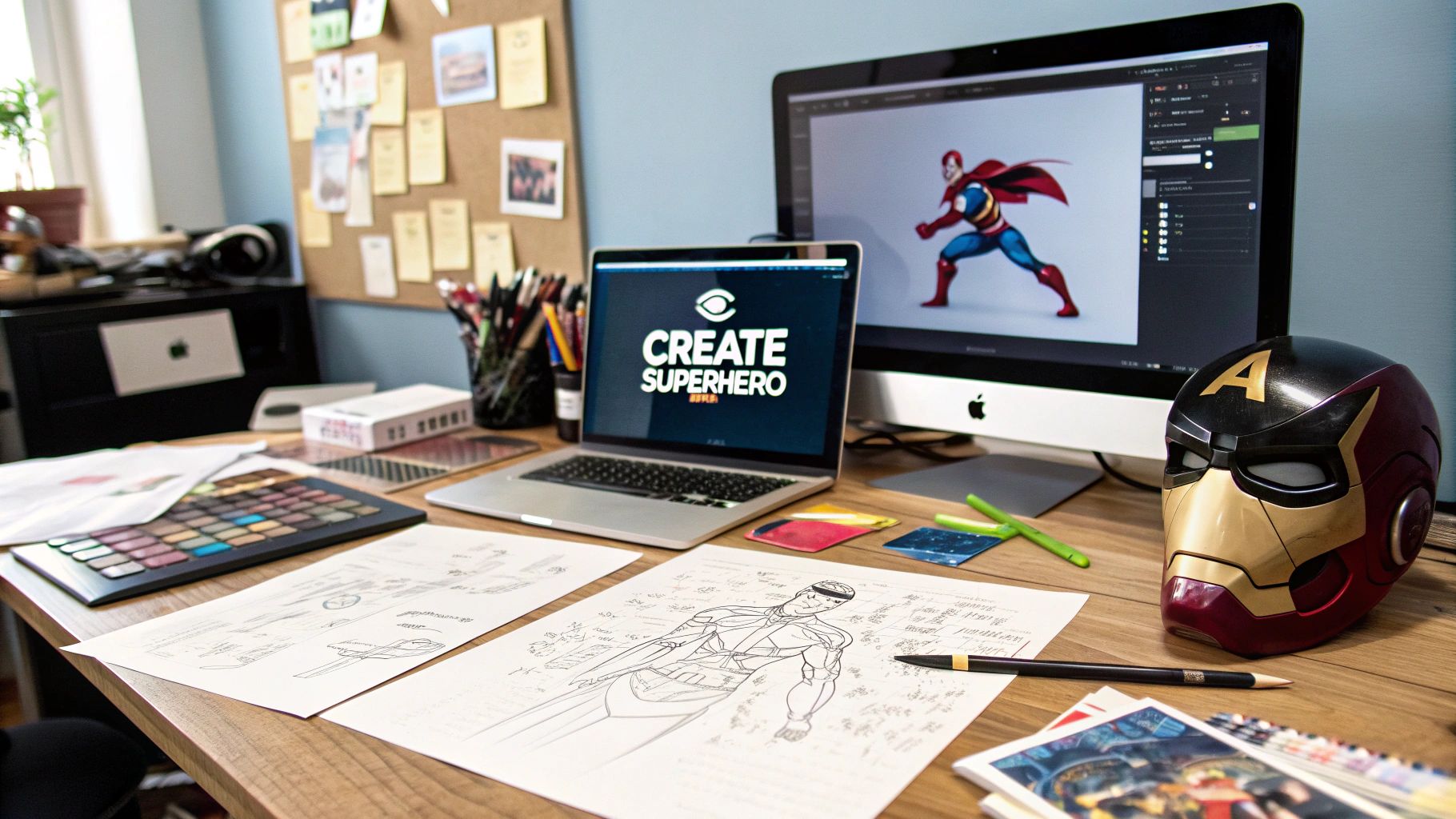
Every great superhero starts not with a cape or a laser beam, but with an idea. Before you even think about costumes or logos, you need to dig deep into who your character is at their core. This is where you lay the groundwork for their entire existence—their backstory, their personality, and the inner demons they fight. This is the stuff that makes a hero stick with you long after the story is over.
Crafting the Heart of Your Hero
Before your hero can save the world, they need a soul. A truly compelling character is so much more than a cool set of powers and a slick outfit; they’re a mirror of our own struggles, hopes, and imperfections. This is where you breathe life into your creation, building a narrative foundation that will make people actually care about them.
Forget about the epic battles for a moment. This part of the process is about the quiet, thoughtful work of building a person. Think of it like you're writing their secret history—the life they had before the mask. What moments broke them? Who did they love, and who did they lose? Answering these questions builds a rich inner world that will drive every choice they make.
Building a Backstory with Purpose
A powerful origin story does more than just explain how someone got their powers; it shapes their entire philosophy. Try to move beyond clichés like "parents murdered in an alley" unless you've got a fresh twist that gives it new meaning. Instead, focus on crafting a history that directly fuels their motivations and defines their moral compass.
To get started, consider these key ingredients:
- Defining Moments: Pinpoint two or three pivotal events from their past that changed everything. Was it a gut-wrenching failure, a tragic loss, or a surprising victory against all odds?
- Relationships and Mentors: Who mattered in their pre-hero life? A wise mentor, a childhood rival, or a lost love can all serve as powerful emotional anchors for their journey.
- The "Why": Most importantly, their backstory has to answer the big question: Why do they put on the costume? Is it for redemption? Revenge? A sense of duty? The answer should be woven directly into their past.
Before diving into visual design, it's a good idea to map out these core components. Think of it as your character's blueprint.
Core Components of a Compelling Superhero Concept
This table provides a quick reference for building a well-rounded character before you start the design process.
| Element | Key Questions to Answer | Example Application (for a hero named 'Chrono') |
|---|---|---|
| Origin Story | How did they get their powers? What event set them on their path? | A historian who accidentally activated an ancient artifact, now he can manipulate short bursts of time. |
| Core Motivation | Why do they fight? What is their ultimate goal? | He’s driven by the guilt of a past mistake he couldn't undo, now he's obsessed with preventing similar tragedies. |
| Central Conflict | What is their main internal or external struggle? | Every time he uses his power, he loses a personal memory. The more he saves others, the more he forgets himself. |
| Defining Flaw | What is their biggest weakness or character flaw? | He's arrogant and believes he alone can fix the timeline, often refusing help and underestimating his enemies. |
Having these elements defined gives your hero depth and makes their story far more engaging.
The Importance of a Relatable Flaw
Let’s be honest: perfection is boring. The heroes we truly love are the ones who are messy and flawed. A central weakness or internal conflict is what grounds your character, making them human and relatable. It’s also a goldmine for creating dramatic tension and opportunities for growth.
A hero's greatest weakness is often the flip side of their greatest strength. A character driven by a fierce loyalty to their family might also be blinded by it, making them vulnerable to manipulation. This duality is what creates compelling, three-dimensional characters.
For instance, a hero with unimaginable physical strength might be crippled by a deep-seated fear of losing control and hurting someone. That internal struggle is often more gripping than any punch they throw. It makes their victories feel earned and their failures feel real. For more structured guidance, you can explore our other creator resources at https://createinfluencers.com/guides.
Understanding who you're creating for is also a huge piece of the puzzle. The superhero genre has some clear demographic trends. In 2024, for example, teenagers aged 13 to 19 accounted for a whopping 38.1% of the action figure market's consumer base. This tells you that themes of identity, responsibility, and finding your place in the world resonate strongly with a key part of the audience.
Ultimately, this foundational work makes your hero more than just a symbol. To see how these concepts are applied in a different but related field, check out this ultimate guide to game character design, which offers incredible insights that translate perfectly to creating any kind of hero.
Designing Your Hero's Iconic Look
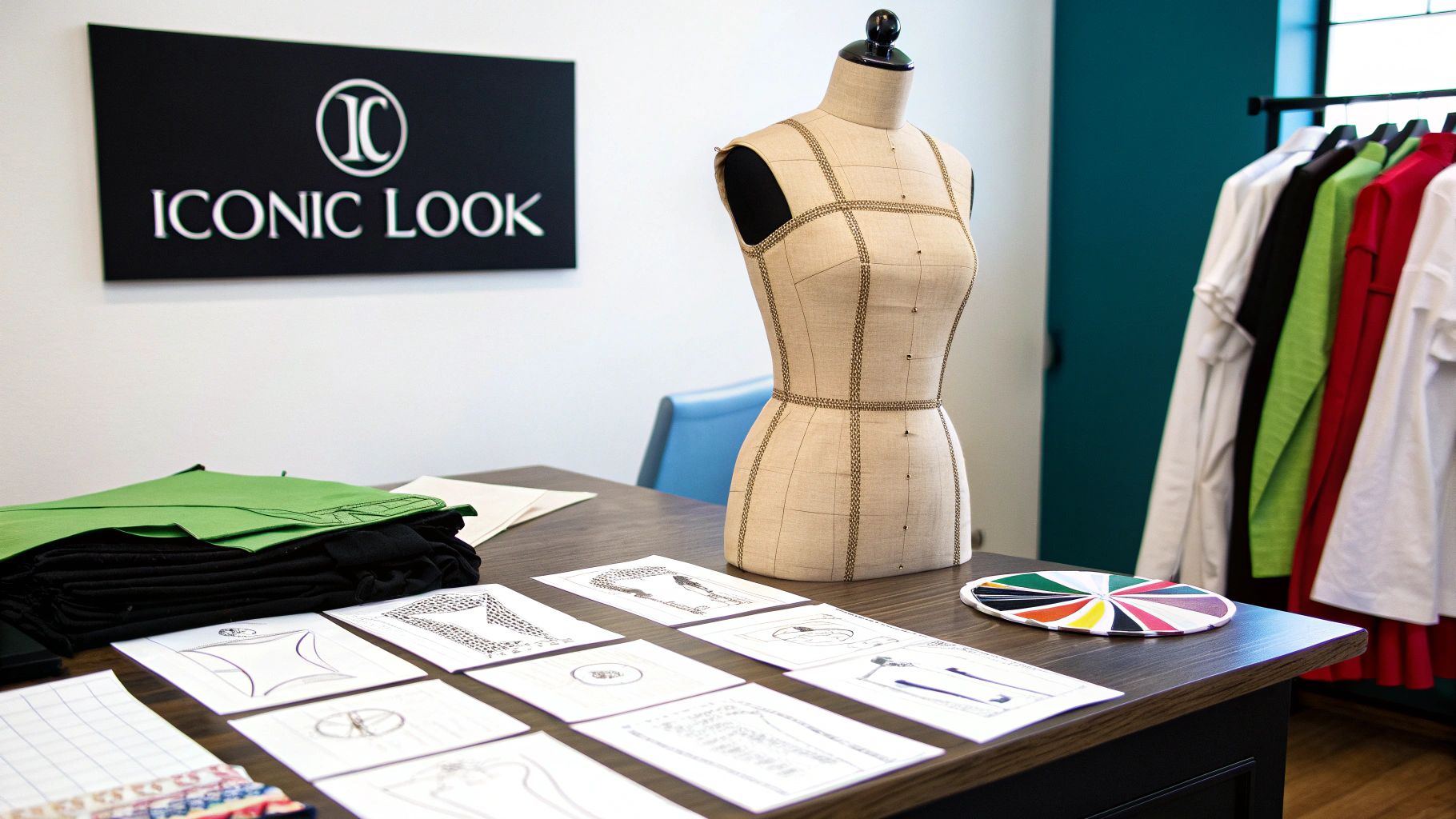
Now that you've figured out your hero's backstory and personality, it's time for the fun part: crafting their visual identity. A great costume is so much more than just clothes. It's a silent story, a piece of personal branding that tells the world who your character is before they even throw a punch.
The design—from the color scheme to the symbol on their chest—is your first and most powerful tool for making an impression.
Think about the legends. You know who they are from a simple silhouette or a flash of color. That kind of instant recognition isn't an accident. It comes from a deliberate design process where every single visual choice reinforces the character's core mission and personality.
The Psychology of Color
Color is a language all its own. The shades you pick for your hero’s costume will instantly connect with your audience on an emotional level, setting the stage for their personality and moral compass. Getting this right is absolutely fundamental when you create your own superhero.
A classic palette of primary colors—bold reds, blues, and yellows—tends to scream traditional heroism. Think of those golden-age champions who stand for hope and straightforward justice. On the other hand, darker, more muted tones like deep purples, grays, and blacks often hint at a more complex, morally gray, or stealthy character.
Keep these associations in mind as you build your palette:
- Red: Evokes passion, anger, speed, and raw power. It's a color that demands attention and can work for both a heroic leader and a dangerous villain.
- Blue: Often linked to trust, calm, intelligence, and authority. It’s a go-to for stoic guardians and protectors of the innocent.
- Green: Can represent nature, healing, and life, but it can also signal poison, envy, and corruption. The specific shade you choose makes all the difference.
- Black: Signifies mystery, sophistication, death, and stealth. It's the perfect choice for a nocturnal vigilante or a hero haunted by a dark past.
Don't just choose your favorite colors; choose colors that tell a story. A hero who draws power from the earth might be decked out in rich browns and vibrant greens. An AI-powered hero? Maybe a sleek, metallic silver and electric blue.
Balancing Style with Practicality in Costume Design
Sure, a costume needs to look incredible, but it also has to make sense for your hero's powers and the world they live in. The most memorable designs strike that perfect balance between iconic style and real-world function. You have to ask yourself: how does this outfit actually help them do their job?
A speedster, for example, would need a slick, aerodynamic suit made from friction-resistant material—not a heavy cape that would just get in the way. A hero operating in the arctic needs insulated gear, while one navigating a dense jungle might wear something more rugged and utilitarian, with plenty of pockets and durable fabrics.
The best costume designs feel like an extension of the hero's powers and personality. The design should answer practical questions: Does it offer protection? Does it enhance their abilities? Does it allow for a full range of motion? Functionality breeds authenticity.
Think about the materials, too. Is the suit forged from an advanced alien alloy, a reinforced tactical weave, or something they put together in their garage? These little details add rich layers to their backstory and available resources. If you're looking for visual ideas, exploring the different aesthetics on the CreateInfluencers blog can be a great source of inspiration.
Creating a Symbol That Sticks
Last but not least, every great hero needs a symbol. This is the heart of their brand—a logo that can be slapped on merchandise, projected into the night sky, or left as a calling card. It needs to be simple, bold, and unforgettable.
The most powerful symbols are deeply connected to the hero's name, powers, or origin story. A hero named "Nova" might have a starburst on their chest. Someone with insect-like abilities? A stylized beetle or spider makes perfect sense. The goal is to distill their entire identity into one strong graphic mark.
Your hero's symbol should be:
- Simple and Scalable: It has to look good whether it's a tiny emblem on a belt buckle or blown up on a billboard. Ditch the overly complex details.
- Unique and Memorable: It must stand out and be easy to remember. A good test is to see if someone can sketch it from memory after a quick look.
- Meaningful: The design should have a story behind it that connects directly to who the character is at their core.
This visual trio—color, costume, and symbol—is the secret sauce. When they all work together, you create a cohesive and powerful look that will make your hero truly unforgettable.
Using AI to Visualize Your Character

You’ve got a solid backstory and a killer design concept. Now it's time for the fun part: bringing your hero out of your head and onto the screen. This is where those abstract ideas of color, costume, and personality finally become tangible.
Thankfully, you no longer need to be a professional artist to produce stunning visuals. AI image generators can turn your descriptions into detailed art, letting you iterate on your hero's look with incredible speed. Instead of spending days sketching, you can generate dozens of variations in minutes. The process is less about technical drawing skill and more about the art of communication—learning how to "talk" to the AI.
Mastering the Art of the Prompt
The quality of your AI-generated images comes down to one thing: the quality of your prompts. A vague, one-line request will get you a generic, uninspired result. But a detailed, evocative prompt? That acts like a creative brief for a world-class artist, guiding the AI to produce something that truly matches your vision.
Think of yourself as a director, not just a typist. Your job is to give the AI as much context as possible. Honestly, a huge part of this is just learning how to prompt AI to create an image effectively, because the smallest details can make all the difference.
I find it helpful to build prompts in layers. Start with the core subject, then layer on descriptors for style, composition, lighting, and mood.
- Subject: Describe your hero's physical appearance, costume, and pose. For instance, "A female superhero with glowing blue eyes, wearing a dark gray tactical suit with silver circuitry patterns."
- Style: Specify the artistic vibe you're going for. Is it a "photorealistic portrait," "anime character concept art," a "gritty comic book illustration," or something "cinematic 8k"?
- Setting & Lighting: Put your hero in a world. "Standing on a rain-slicked rooftop at night, illuminated by dramatic neon city lights, soft volumetric lighting."
- Composition & Mood: Guide the camera and the feeling. "Dynamic action pose, full-body shot, looking determined, intense and powerful mood."
When you put it all together, you create a rich instruction that the AI can interpret with far greater accuracy.
Achieving Character Consistency
One of the biggest hurdles when you create your own superhero with AI is keeping the look consistent across multiple images. It’s frustrating when the AI generates a character with different facial features or costume details in each new picture. It completely breaks the illusion.
This is where specialized platforms like CreateInfluencers come in. They're designed to solve this exact problem by letting you train the AI on a specific character model. You upload a few key images of your hero, and the system learns their unique features. This ensures that your character remains recognizably themself, no matter the scene.
If you’re not using a tool with a character-locking feature, you can try using seed numbers. A seed number is basically a starting point for the AI's random generation process. By reusing the same seed, you're telling the AI to generate images that are stylistically and compositionally similar, which helps keep your character's appearance more stable from one image to the next.
Pro Tip: I always create a "character sheet" prompt. This is a master prompt containing all the core, unchangeable details of my hero's appearance. I copy and paste this into every new prompt, then just add the new details for the specific scene or action I want.
Troubleshooting and Refining Your Visuals
Let's be real: your first few attempts probably won’t be perfect. That's a normal part of the process. The real skill is learning to spot the problems and fix them.
Here’s a quick guide to fixing some common AI art headaches:
| Problem | Potential Solution | Example Tweak |
|---|---|---|
| Strange Hands or Limbs | Add phrases like "anatomically correct" or "detailed hands" to your prompt. You can also use negative prompts like --no extra fingers. |
...photorealistic portrait, detailed hands, anatomically correct... |
| Inconsistent Costume Details | Be hyper-specific. Instead of "red suit," describe it: "suit made of crimson metallic nanotechnology plates with gold trim." | ...wearing a suit of crimson metallic nanotechnology plates... |
| Generic or "Plastic" Look | Specify realistic textures and lighting. Use terms like "subsurface scattering" for skin, "detailed fabric texture," and "cinematic lighting." | ...cinematic lighting, detailed fabric texture, subsurface scattering... |
Don't be afraid to hit that "generate" button again and again. Sometimes, a tiny random variation is all it takes to get the perfect shot. With a combination of detailed prompting, consistency tricks, and a little patience, you'll be well on your way to building a professional visual portfolio for your superhero.
Bringing Your Hero to Life with Multimedia
A fantastic character portrait is a huge first step, but let's be honest—in a world dominated by motion, a static image just won’t cut it for long. If you want to grab an audience and build a real following, your hero needs to feel like they’re actually doing something. They need to be dynamic and alive.
This is where multimedia changes the game. It’s the bridge that takes your hero from a cool concept to a living, breathing digital personality.
The best part? You don't need a Hollywood budget or a team of animators anymore. AI tools have thrown the doors wide open for solo creators, making it surprisingly easy to produce slick video clips, find the perfect voice for your character, and even create simple animations. This is how you stop just telling people about your hero and start showing them.
Creating Action-Packed Promo Videos with AI
Short-form video is the currency of platforms like TikTok, Instagram Reels, and YouTube Shorts. Think about it: a ten-second clip of your hero landing on a rooftop, energy crackling around their fists, is infinitely more shareable than a single picture.
This is where AI video generators come in. These tools can take the character images you’ve already created and bring them to life. By feeding them a prompt like, "make the character's eyes glow with blue energy as wind whips their cape," you can add subtle but powerful motion. Some of the more advanced platforms can even generate entire animated scenes from a simple text description.
To get the most out of these tools, I've found it helps to focus on a few things:
- Micro-Moments: Forget animating a full-on battle. Concentrate on small, punchy actions—a knowing smirk, a power flaring to life, or a dramatic turn toward the camera.
- Atmospheric Effects: Little details make a huge difference. Adding rain, flying debris, or a bit of lens flare can instantly elevate the cinematic feel of your clip.
- Clear Prompts: Just like with image generation, being specific is your best friend. Describe the camera angle ("low angle shot, looking up"), the speed of the motion ("slow, deliberate movement"), and the overall mood.
These bite-sized videos are perfect for social media teasers and building hype for whatever you have planned next.
Giving Your Superhero a Voice
So, what does your hero actually sound like? Is their voice a deep, commanding baritone or a sharp, quick-witted tenor? A character's voice is a massive piece of their identity, and AI voice generators make finding the right one incredibly straightforward.
These platforms let you type in a script and hear it performed in a huge range of voices and emotional styles. You can play around until you land on one that just clicks with the personality you've developed. Think about how a confident, unshakable hero would deliver a line compared to a rookie who's still finding their footing.
A hero's voice solidifies their persona. Using a consistent AI-generated voice for social media clips, animated shorts, or even audio logs creates a powerful layer of immersion for your audience, making the character feel more real and recognizable.
For instance, a stoic, ancient guardian might have a deep, slow, and resonant voice. A plucky teenage sidekick, on the other hand, would probably have a higher-pitched, energetic voice crackling with enthusiasm. You can then layer this audio over your AI-generated videos or motion graphics to create seriously compelling content.
Simple Animation and Motion Graphics
Beyond generating full video scenes, there are simpler ways to bring your hero's world to life. Motion graphics are a fantastic way to tell bite-sized stories or present lore in an engaging format.
Here are a few accessible techniques to try:
- Parallax Effect: This sounds complex, but it's not. You take a static image, separate it into layers (character, background, foreground), and move them at slightly different speeds. It creates a slick illusion of depth and movement.
- Kinetic Typography: Animate the text of a famous quote from your hero or a key piece of their origin story. It’s a surprisingly effective method for conveying personality without needing complex character animation.
- Animated Logos: Take your hero’s symbol and give it a simple reveal animation. This makes for a professional-looking intro or outro for all of your video content.
When you start combining these different multimedia elements, you move beyond just showing people your hero; you let them experience your hero. This multi-sensory approach is how you build a character that sticks in people’s minds and grows a dedicated community around them.
Protecting and Monetizing Your Superhero
So, you've brought an amazing new hero to life. The design is locked in, the backstory is compelling, and the visuals are stunning. What's next? It's time to think bigger. Your superhero is more than just a creative outlet; it’s a valuable piece of intellectual property (IP).
Thinking about how to protect and sustain your creation isn't just about boring legal stuff. It's about building a solid foundation that lets your hero grow into a real brand. Getting this right from the start can save you a world of trouble later and unlock opportunities you haven't even imagined yet.
Getting a Handle on Your Intellectual Property
Before you can make a dime, you have to know what you actually own. When it comes to creative work, your two best friends are copyright and trademark. They might sound similar, but they protect very different things.
- Copyright is your automatic shield. The moment you create something original—the art, the stories, the videos—it's copyrighted. This gives you the exclusive right to copy, share, and show off your work. Essentially, it protects the expression of your hero, not just the general idea of "a person who can fly."
- Trademark is all about brand identity. It protects the things that make your hero recognizable: their name, that cool symbol on their chest, or even a signature catchphrase. A trademark stops others from using something similar that could confuse your audience.
If you ever plan on selling t-shirts, posters, or any other merchandise, getting a trademark for your hero’s name and logo is a must-do. It legally solidifies your ownership and gives you the power to stop anyone trying to cash in on your hard work.
While copyright protection is automatic, officially registering it with your country's copyright office creates a public record of your ownership. This is a game-changer if you ever need to prove it in a legal dispute. Think of registering your copyright and trademark as proactive moves to future-proof your brand.
Finding Your Path to Monetization
With your IP squared away, you can start exploring ways to earn some money from your hero. The trick is to pick strategies that feel authentic to your character and fit your own goals. You don’t have to do it all at once. Start small, see what works, and build from there.
The comic book market itself is a fantastic place to start. It's a classic for a reason. Valued at roughly USD 16.83 billion in 2024, the global comic book industry is expected to jump to nearly USD 26.75 billion by 2032. That's a huge, growing audience hungry for new stories and heroes. For a new creator, diving into this market is a direct line to building a loyal fanbase and cementing your hero's place in the world.
Monetization Models for Your Superhero
There are a ton of ways to generate revenue from your character. This table breaks down some of the most common approaches to help you decide what fits best for you.
| Monetization Model | Potential Revenue | Effort Level | Key Considerations |
|---|---|---|---|
| Direct Sales (Prints/Comics) | Low to Medium | Medium | You'll manage inventory, printing, and shipping, but it’s a fantastic way to connect directly with your fans. |
| Merchandise (T-shirts, Mugs) | Medium | Low to High | Print-on-demand services make it easy to start, but creating custom items takes more upfront investment. |
| Crowdfunding (Kickstarter) | Medium to High | High | Perfect for funding a big project like a graphic novel, but you'll need a serious marketing plan to succeed. |
| Subscription (Patreon) | Low to High (Recurring) | High | This requires a steady stream of new content to keep subscribers happy, but it can provide a reliable income. |
Choosing the right path really comes down to who your audience is, what they want, and how much time and resources you can put in.
Your Responsibilities and Building a Community
As you unleash your superhero into the world, remember that you're adding to a massive cultural conversation. The characters we love inspire us, challenge our thinking, and hold a mirror up to our world. Be mindful of the messages your hero is sending.
Just as important as any sales strategy is building a positive, inclusive community around your work. Talk to your audience, listen to what they have to say, and make your corner of the internet a place where fans feel welcome. A strong community is your greatest asset. They’ll be your first customers, your loudest cheerleaders, and the motivation you need to keep going.
For those interested in leveraging their creative influence, exploring partnership opportunities can be a powerful next step. We've seen many creators find success through collaborations, and you might find that our affiliate program is a great fit for your new brand. This can be an excellent way to connect with other creators and generate additional revenue as your hero's popularity grows.
Got Questions About Creating a Superhero?
Diving into creating your own superhero is exciting, but it almost always kicks up a storm of questions. You might be wrestling with creative doubts or wondering how you'll ever find an audience. It's easy to feel a bit swamped. Let's break down some of the most common hurdles you'll likely run into.
One of the biggest anxieties I hear from creators is the classic, nagging fear: "What if my idea has already been done?" In a genre as packed as superheroes, that's a totally fair concern. But here’s the secret—originality isn’t about inventing something from a complete vacuum.
True originality comes from your unique voice and perspective. A character who controls fire? Not new. But what about a disillusioned firefighter who now uses those powers to recreate the beautiful, intricate patterns of the flames they once fought? Now that's a fresh angle. The magic is in the execution and the emotional heart of your character, not just the power they wield.
Your specific blend of backstory, flaws, motivations, and visual style is what will make your hero genuinely one-of-a-kind. Don't lose sleep over a little overlap with existing characters; instead, lean into what makes your version personal and different.
What to Do When Creative Blocks Hit
It happens to everyone. Sooner or later, you'll hit a wall. The ideas dry up, the story feels stale, and you're not sure what to do next. When this happens, the worst thing you can do is try to force it. It’s time to step away and feed your brain something new.
Here are a few tactics that have worked for me and countless other creators:
- Explore Unrelated Art: Pop into a museum, throw on a new genre of music, or watch a foreign film. Bumping into different creative works can spark connections you'd never expect.
- Switch Up Your Scenery: Take a walk in a different part of town or work from a library instead of your usual desk. A simple change of environment can do wonders for a stuck mind.
- Play the "What If?" Game: Take a core piece of your character and flip it. What if your hero lost their powers? What if their closest ally betrayed them? These little thought experiments can blast open new story possibilities.
How to Find Your First 100 Fans
Making the hero is one thing; getting people to actually care is a whole other challenge. The good news is you don't need a Hollywood marketing budget to start building a community. The key is to find where your potential audience is already hanging out and share your work in a way that feels genuine.
Platforms like Instagram, TikTok, and Reddit are goldmines for showing off visual art and short clips of your hero. Use the right hashtags and, more importantly, actually talk to people in the superhero and comic art communities. The goal is to build real connections, not just shout into the void. Many creators are using specialized tools to build their online presence, and you can dive into different strategies with the resources over at CreateInfluencers.
Is There Still a Market for New Superheroes?
It’s easy to look at the massive, dominant franchises and wonder if there's any room left for new heroes. The answer is a huge, emphatic yes. Just look at the numbers. The global action figure market, a space where superheroes are king, was worth about USD 8.27 billion in 2022.
Of that massive pie, superheroes themselves carved out USD 3.74 billion. Better yet, that segment is expected to grow in a big way by 2030, which you can read more about on GrandViewResearch.com. This data is clear proof that audiences are always hungry for fresh, compelling heroes to believe in—and to collect.
Ready to turn that unique superhero vision into stunning reality? CreateInfluencers provides the AI tools you need to generate lifelike characters, dynamic scenes, and incredible videos in minutes. Sign up for free today and start building your hero's legacy at https://createinfluencers.com.