How to Build a Personal Brand Online: A Practical Guide
Learn how to build a personal brand online with practical steps to define your identity, create standout content, and grow an engaged audience.

Building a personal brand isn't about faking it 'til you make it. It's a long-term play, centered on earning trust and authority by showing up as your true self, consistently. Think of it as translating the best parts of who you are offline into a compelling presence online. This isn’t about chasing vanity metrics; it’s a marathon, not a sprint.
Defining Your Authentic Personal Brand
Jumping straight into creating content without a solid foundation is a classic mistake. It's like trying to build a house without a blueprint—you'll end up with something wobbly and inconsistent. The brands that truly connect with people are built on authenticity, not on chasing the latest trends or trying to be someone you're not.
This first part is all about looking inward. You need to get crystal clear on who you are, what you stand for, and who you're here to help. This isn't just a fluffy branding exercise; the clarity you gain here will shape every single piece of content you create and every conversation you have.
Uncover Your Unique Value Proposition
So, what makes you different? Your Unique Value Proposition (UVP) is the answer. It’s that sweet spot where what you love, what you're good at, and what people actually need all come together.
To find it, grab a notebook and map out these three things:
- Passions: What could you talk about for hours? What do you find yourself reading about on a Saturday morning, just for fun?
- Skills: What are you genuinely good at? Think beyond your job title. This includes hard skills, like coding or data analysis, and soft skills, like being an amazing communicator or having a ton of empathy.
- Audience Problems: What are the real-world struggles people in your niche are facing? What questions are they constantly asking that you can answer?
Your UVP is where those three circles overlap. Imagine a software developer who's also passionate about sustainable living and has a knack for making complicated stuff seem simple. Their brand could be all about teaching eco-conscious coding. That’s specific, valuable, and unique.
A personal brand isn’t about trying to be everything to everyone. It's about becoming the go-to expert for a very specific group of people by consistently delivering on one focused promise. Real influence is built on depth, not breadth.
Define Your Core Mission and Message
Once you've nailed down your UVP, it's time to distill it into a clear mission statement. This is your "why" in a single sentence. It’s the North Star that keeps everything you do on track.
From that mission, you can develop your core messaging pillars. These are the 3-5 key themes you'll talk about over and over again. They bring your mission to life. For example, a financial advisor helping millennials get their money right might have these pillars:
- Making investing feel less intimidating for beginners.
- Practical strategies for tackling student loan debt.
- How to build long-term wealth, even with a normal income.
Defining these pillars saves you from the "what should I post today?" panic and makes it clear to your audience what they can expect from you. If you want to really get this right, building out a modern content marketing strategy guide is a must.
Identify and Understand Your Target Audience
You can't connect with people if you don't know who you're talking to. That’s why creating a detailed audience persona—a fictional profile of your ideal follower—is so important. Don't just stop at basic demographics like age and location. You need to get into their heads.
What are their biggest goals? What keeps them up at night? Where do they hang out online? The idea is to understand their world so well that your content feels like you're speaking directly to them, one-on-one.
This deep connection hinges on being real. People can spot a fake from a mile away. In fact, 86% of consumers say authenticity is a huge factor when they decide which brands to follow and buy from. What's more, 57% will gladly pay more for brands they feel a genuine connection with. You can dig into more of these branding statistics on DigitalSilk.com. It just goes to show: a brand that feels human will always win out over one that feels cold and corporate.
Developing Your Content Engine and Visual Identity
You’ve done the hard work of digging deep and defining your brand’s foundation. Now comes the fun part: bringing it to life. This is where your mission and message become tangible—things your audience can actually see, read, and connect with. Building a powerful personal brand isn’t about random posts; it’s about creating a systematic content engine that works for you.
Your goal here is to build a reliable system for creating and sharing content that consistently proves your expertise and builds real trust. Forget perfection. The key is to be consistent and valuable.
Establish Your Core Content Pillars
First things first, you need to figure out what you're actually going to talk about. Your core content pillars are the three to five foundational topics your brand will own. These aren't just random ideas; they flow directly from your unique value proposition and what your audience is hungry to learn.
Think of them as the main categories on a blog or the recurring themes on a podcast. They give your content structure and keep you from getting sidetracked.
A personal branding coach for tech executives, for example, might build their content around these pillars:
- Executive Presence: Everything from communication hacks and confidence-building to leadership storytelling.
- LinkedIn Mastery: Actionable tutorials for optimizing profiles and crafting posts that actually get seen.
- Thought Leadership: Practical strategies for developing and sharing unique industry insights that set you apart.
- Networking Strategies: Real-world tips for building meaningful professional relationships, both online and off.
Every single piece of content you create—every post, video, or newsletter—should tie back to one of these pillars. This is how you stay focused and make your message stick.
Design a Cohesive Visual Identity
Before you even hit "publish," you need a plan for how your content will look. A strong visual identity makes your brand instantly recognizable. You want someone scrolling through their feed to see a post and know it's yours before they even read a word.
Your visual identity really comes down to a few key elements:
- Color Palette: Pick 2-3 primary colors and 1-2 accent colors that match your brand’s personality. A financial advisor might go with a trustworthy navy and gray, while a creative coach could opt for something bright and energetic.
- Typography: Choose two fonts that work well together—one for headings, one for body text. Make sure they are clean, easy to read, and fit your brand’s overall vibe.
- Imagery Style: What’s the feel of your photos and graphics? Are they polished and professional? Or are they more candid and behind-the-scenes? Decide on a consistent style and stick to it.
This simple process shows how the foundational work—uncovering your value, defining your mission, and knowing your audience—directly informs the brand people will come to recognize.
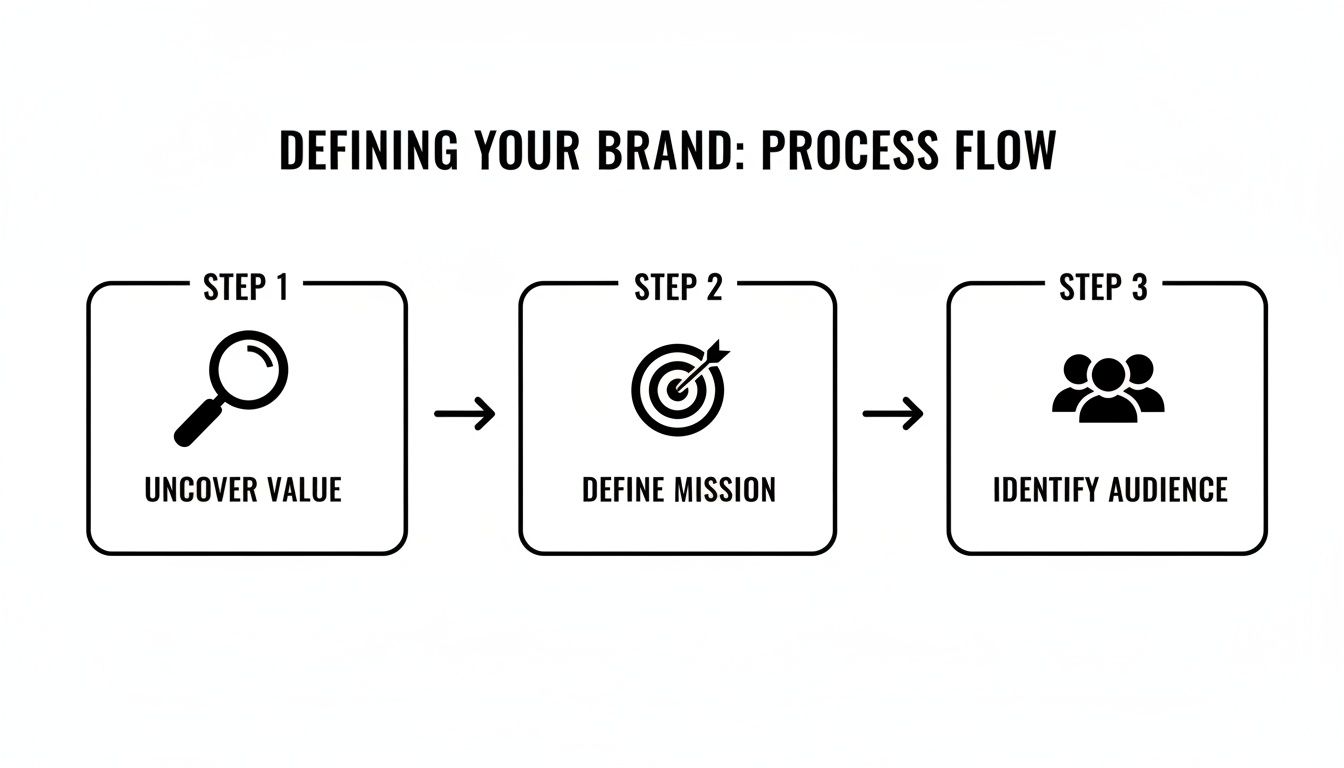
As you can see, a powerful brand is built in layers. You have to start with the deep internal work before you can effectively express it on the outside through your content.
Create a Sustainable Content Calendar
A content calendar is your secret weapon for staying consistent. It's nothing fancy—often just a spreadsheet or a calendar app—but it’s your roadmap for what you'll post, where, and when. Having a plan eliminates that daily "what should I post today?" panic.
To get started, I recommend focusing on a weekly schedule. Here's a sample of what that could look like for someone juggling a few different platforms.
Example Content Calendar for a Personal Brand
This table shows how a brand might plan out a week of content, making sure to hit different content pillars and use a variety of formats to keep their audience interested.
| Day | Platform 1 (e.g., LinkedIn) | Platform 2 (e.g., Instagram) | Platform 3 (e.g., Newsletter) |
|---|---|---|---|
| Monday | Pillar 1: Quick tip video on a core topic (e.g., productivity hack). | Pillar 1: Carousel post expanding on the same tip with visuals. | |
| Tuesday | Pillar 2: Behind-the-scenes Story showing a "day in the life." | ||
| Wednesday | Pillar 2: Thought-leadership post sharing a personal story or industry insight. | ||
| Thursday | Pillar 3: Q&A session in Stories using the question sticker. | Pillar 1-3: Weekly roundup newsletter with the week's best content and an exclusive deep dive. | |
| Friday | Pillar 3: Engaging post with a question or poll to spark conversation. | Pillar 2: Infographic or visually appealing graphic summarizing a key concept. |
This kind of planning ensures you’re not just posting but posting with purpose. It also makes it much easier to repurpose ideas across different channels.
Remember, start with a realistic cadence. Posting 3-4 high-quality pieces of content a week on one or two platforms is far more effective than trying to be everywhere at once and burning out.
Consistency doesn't mean you must post every single day. It means showing up predictably with valuable content so your audience knows what to expect and when. This is how you build trust and become a reliable source in your niche.
This foundational work in content and visuals ensures your brand not only has something valuable to say but also says it in a way that is immediately recognizable and consistently engaging. If you’re looking for more inspiration on content strategies, check out our comprehensive guides for creators and influencers.
Choosing Your Platforms and Growing an Audience
So, you've nailed down your brand identity and mapped out your content. Now comes the fun part: finding your people. But here’s a piece of advice I can't stress enough: spreading yourself across every social media platform is a surefire way to burn out fast and produce a lot of mediocre content.
The smarter play? Master one or two channels where your target audience is already hanging out. It's a classic mistake to try and be everywhere at once. Think of your energy as a laser beam, not a floodlight. Your goal is to go deep and build real connections, not just be a fleeting presence everywhere.
Strategically Select Your Core Platforms
Every social platform has its own vibe, its own rules, and its own audience. Picking the right one isn't about which one you personally scroll through the most; it's about making a strategic decision based on where your ideal audience gathers and how they like to consume content.
Let's break down the major players and their distinct personalities:
- LinkedIn: This is the undisputed champion for B2B professionals, consultants, and anyone building a brand around their career. It’s the place for thought leadership, deep industry insights, and professional networking. If you're good with words, long-form posts and carousels do incredibly well here.
- Instagram & TikTok: These are visual-first playgrounds driven by personality and creativity. They're perfect for coaches, artists, and lifestyle brands who can tell a story through eye-catching videos, high-quality photos, and authentic, behind-the-scenes moments.
- X (formerly Twitter): Want to jump into real-time conversations and share quick, punchy insights? This is your spot. It's a fantastic tool for journalists, tech experts, and anyone who wants to build authority by commenting on what's happening right now.
- YouTube: This is the ultimate platform for cementing your expertise with in-depth video content. It’s basically the world's second-largest search engine, making it ideal for educators, reviewers, and storytellers who want to create evergreen tutorials and guides that will serve their audience for years.
To make your choice, ask yourself a couple of simple questions: Where are my peers and industry leaders having the most meaningful conversations? And which platform feels like the most natural fit for the content I've planned? Pick one main platform and, if you feel ambitious, a secondary one to start. You can always branch out later once you’ve built some solid momentum. You can find more great insights on this over at https://createinfluencers.com/blog.
Grow Your First 1,000 True Fans
Getting those first few hundred followers can feel like the toughest climb. The old "post and pray" method—just tossing content out there and hoping someone finds it—is a recipe for disappointment. You need to be proactive.
And forget about vanity metrics for a second. Your real mission is to find your first 1,000 true fans. This isn't just a number; it's a core community of people who truly resonate with your message and will become your biggest supporters.
One of the biggest myths is that you need a massive following to make an impact. The truth is, a small, deeply engaged community is infinitely more valuable than a huge, passive audience. Focus on connection, not just reach.
Here are a few tactics that actually work for attracting that initial audience:
- Engage Authentically in Niche Communities: Stop just broadcasting your own stuff. Go where your people are already talking—think relevant LinkedIn groups, niche subreddits, or even the comment sections of bigger creators in your space. Add real value by answering questions and sharing your perspective without a sales pitch.
- Collaborate with Your Peers: Find other people who are at a similar stage in their brand-building journey. You can cross-promote each other, host a joint Instagram Live, or write a guest post for their blog. This is a powerful way to get in front of a new, highly relevant audience.
- Optimize for How People Discover Content: Every platform has its own discovery engine. Get smart about using relevant hashtags on Instagram and TikTok, sprinkle keywords in your YouTube titles and descriptions, and jump on trending topics on X.
As you start getting strategic about your platforms and audience growth, it's also smart to get a handle on the basics of What is Search Engine Optimization. This knowledge is crucial for making your personal brand visible beyond social media, ensuring that people can find you when they're actively searching for the solutions you offer. It’s the difference between chasing an audience and having them come to you.
Turning Followers into a Loyal Community
Getting a decent follower count feels great, I get it. It's a milestone. But it's not the end game. The real magic, the kind that builds a lasting personal brand, happens when you turn those passive followers into an active, loyal community.
Think of it this way: a big audience might listen when you talk, but a true community talks back. They support you, they engage with each other, and they become your biggest advocates. This is the shift from just broadcasting a message to actually starting a conversation, and it’s where real influence is born.

From Monologue to Dialogue
If there's one habit that will change everything for you, it's this: respond to comments and DMs. Seriously. When someone takes the time out of their day to engage with your content, replying isn't just being polite—it’s a strategic move. It shows there's a real person behind the screen who actually values what they have to say.
This simple act has a powerful ripple effect. When others see you actively engaging, they're far more likely to jump into the conversation themselves. It creates a vibe that's welcoming and interactive. Try to block out even 15 minutes a day to thoughtfully go through your notifications and reply.
Sparking Meaningful Conversations
Going beyond simple replies means getting intentional with your content. You have to actively invite people to participate. Don't just state facts or share a win; end your posts with open-ended questions that get people thinking about their own lives and experiences.
Here are a few ways I’ve seen this work incredibly well:
- Ask for stories, not just yes/no answers. Instead of asking, "Did you find this tip helpful?" try something like, "What’s one productivity hurdle you're facing this week?" The second one opens the door to a much more personal and interesting discussion.
- Use the platform's interactive tools. Things like polls, Q&A stickers on Instagram Stories, or LinkedIn polls are your best friend. They are low-effort ways for your audience to engage and give you a ton of insight into what they actually care about.
- Don't be afraid to be human. People connect with people, not perfect, polished robots. Sharing a challenge you've overcome or even a mistake you've made makes you relatable. It creates a safe space for others to be vulnerable, too.
This all comes down to knowing your audience. And I mean really knowing them. A staggering 91% of consumers say they are more likely to shop with brands that provide relevant offers and recommendations. What’s more, 68% say that personalized experiences make them feel more valued. You can dig into more of the data on how personalization impacts brand loyalty over at Instapage.com.
A small, tight-knit community of 100 people who are genuinely engaged is infinitely more powerful than a passive audience of 10,000. Always prioritize the depth of your connections over the width of your reach.
Fostering a True Sense of Belonging
Once you've got a good conversation going, the next step is to create a space where your community can connect not just with you, but with each other. This is where your personal brand evolves into something truly special.
This could be a dedicated hub for your most dedicated followers, like a private Facebook group, a Slack channel, or a server on Discord. In this inner circle, you can offer exclusive content, host live Q&A sessions, or just facilitate discussions where members can help each other out.
For instance, a freelance copywriter could start a Slack community for their followers. Inside, they could share job leads, give feedback on each other's work, and discuss the latest industry news. The personal brand is no longer just one person sharing information; it’s the center of a thriving ecosystem.
Ultimately, building a community is about shifting your mindset from "me" to "we." When your audience feels like they're part of something bigger, their loyalty skyrockets. They become the people who share your work without being asked, recommend you to their network, and stick with you for the long haul. They are the rock-solid foundation of your personal brand.
Tracking Your Growth and Monetizing Your Influence
Alright, so you’re creating great content and building a community. That’s the fun part. But how do you know if any of it is actually working? Chasing a bigger follower count is a trap many creators fall into, but it’s a vanity metric. Real growth isn't about the number; it's about understanding what truly connects with your audience and seeing a tangible impact.
To go from being a content creator to a genuine influencer, you have to start thinking like a business owner. This means getting comfortable with data and tracking the key performance indicators (KPIs) that signal a healthy, engaged community—the kind that opens doors to real opportunities.
Measuring What Truly Matters
Every social media platform has its own built-in analytics dashboard, and you need to make this your new best friend. It’s time to look past the follower count and dig into the numbers that tell the real story about your brand's health and your relationship with your audience.
Here are the KPIs I always tell people to obsess over:
- Engagement Rate: This is your brand's pulse. It's the percentage of your audience that actually bothers to interact with your content through likes, comments, and shares. A super-high engagement rate with a smaller, dedicated audience is infinitely more valuable than a low rate with a massive, passive one.
- Reach and Impressions: Think of reach as the number of unique eyeballs that saw your content, while impressions are the total number of times it was displayed. Watching these numbers helps you see if your content is breaking out of your immediate follower bubble and finding new people.
- Website Clicks: If you have a personal website, blog, or portfolio (and you should!), this metric is gold. It proves your brand is strong enough to pull people off a noisy social media app and into a space you completely own and control.
- Audience Demographics: Who are these people following you? Are they the audience you set out to attract in the first place? Knowing their age, location, and interests is critical for making sure your content strategy is hitting the mark.
Once you start checking these numbers regularly, patterns will emerge. You'll quickly see which content pillars spark the most conversation, which post formats get shared the most, and the best times to post for a bigger splash. This data-driven approach takes the guesswork out of the equation, letting you double down on what’s working and ditch what isn’t.
Pathways to Monetization
When you've built an engaged community that trusts your voice, you can start thinking about monetization. This isn't about "selling out." It's about creating a value exchange that helps both you and your audience. The trick is to pick a path that feels authentic to your brand and genuinely serves your community's needs.
There’s no magic bullet here. Your monetization strategy will grow and change right along with your brand.
Monetization is the natural outcome of providing immense value and building deep trust. Don't rush it. When your audience genuinely believes you have their best interests at heart, they will be happy to support you.
Here are a few of the most proven ways to turn your influence into a real income stream:
Offer Your Services
This is often the most direct route to making money. If your brand is built around a tangible skill, you can offer it directly to the people who already know, like, and trust you.
- Coaching & Consulting: Are you an expert in marketing, career growth, or personal finance? Package that knowledge into one-on-one sessions or group coaching programs.
- Freelancing: A graphic designer who has built a strong personal brand on Instagram can land client work directly from their posts. A writer can use their LinkedIn presence to find high-paying freelance gigs.
Create Digital and Physical Products
This is where you scale your expertise. Instead of trading your time for money, you create an asset once and sell it over and over again.
- E-books & Guides: Bundle your best advice into a comprehensive guide that solves a specific problem for your audience.
- Online Courses: If you want to go deeper, a structured video course can be an incredible way to teach your audience everything you know on a subject.
- Templates & Presets: Think about what could make your audience's life easier. Social media templates, project management dashboards, or custom photo editing presets are all fantastic digital products.
Leverage Brand Partnerships
As your audience and influence grow, brands in your niche will start to notice. They'll want to pay for access to the community you've built.
- Sponsored Content: This involves creating posts, videos, or stories that feature a brand’s product or service. Authenticity is everything here—only work with brands you personally use and believe in. Your audience will see right through anything else.
- Affiliate Marketing: This is the perfect place to start. You simply promote products you already love and earn a commission from any sales made through your unique tracking link. It’s a low-risk way to recommend great tools to your audience. If you're serious about this, finding a quality affiliate program for creators is a great first step to building this income stream.
The right path for you will depend on your brand's mission and your audience's needs. My advice? Start small, test a few different ideas, and always, always focus on providing value first. Income always follows impact.
Frequently Asked Questions
When you're first figuring out how to build a personal brand online, a lot of questions pop up. It’s completely normal. Let's tackle some of the most common ones I hear to help clear the path for you.
How Long Does It Take to Build a Successful Personal Brand?
I get this one all the time. Building a brand that actually means something is a marathon, not a sprint. While you can definitely get a solid foundation and some early recognition in a few months, seeing real results—like significant growth and money-making opportunities—usually takes 12 to 18 months of dedicated, consistent work.
The real secret isn't speed; it's consistency. Your focus should be on delivering real value and building genuine relationships, not chasing a viral hit. A loyal, engaged community will always be more valuable and last longer than a moment in the spotlight.
Do I Need to Be an Expert to Start a Personal Brand?
Definitely not. This is a huge misconception. You don't have to be the world’s leading authority on a topic. What you do need is a real passion for it and a desire to share your journey as you learn. Honestly, that's often way more relatable.
Many of the most powerful personal brands are built by people who simply document their process. They share what they’re learning as it happens, which turns their own growth into fantastic content for their audience.
Think of yourself as being just a few steps ahead of your audience. You're guiding them along a path you're also walking. Your authenticity and the value you share are far more important than having every single answer right from the start.
What Are the Most Common Mistakes to Avoid?
It's easy to stumble when you're starting out, and I see a lot of new creators make the same few mistakes. Knowing what they are is the best way to sidestep them completely. Here are the big three:
- Inconsistency: Posting erratically or sending mixed messages just confuses people and kills your momentum. Sticking to a schedule is how you build trust and stay top-of-mind.
- Platform Overload: Trying to master every single social media platform at once is a surefire recipe for burnout and diluted, mediocre content. Get really good at one or two channels first, then expand.
- Pure Self-Promotion: A brand that only talks about itself is a brand that nobody wants to follow. Your number one job is to help, teach, or entertain your audience.
If you consistently put your audience first and provide value, monetization opportunities will naturally come your way. For more tools and resources to help your brand stand out, check out the AI-powered features over at CreateInfluencers.
Ready to create stunning, AI-generated visuals that will make your personal brand unforgettable? With CreateInfluencers, you can design unique AI avatars, images, and videos in minutes. Start for free today and see the difference.