How to create talking avatar from a single photo
Learn how to create talking avatar content with AI tools, voice syncing, and monetization tips.
You don't need a Hollywood budget or a team of animators to create a talking avatar anymore. The basic idea is simple: you feed an AI platform a single photo, pair it with a voice—either a synthetic one or your own recording—and the technology does the heavy lifting, automatically generating the lip-sync and facial animations. It’s a game-changer that puts professional-grade digital personas within anyone's reach.
Why Talking Avatars Are Reshaping Content Creation
Talking avatars have exploded from a niche sci-fi concept into a powerful force in digital communication. This isn't just about fun animations; it's a fundamental shift in how we produce and consume content. For creators, marketers, and businesses, these AI-driven personas are becoming practical, everyday tools for engaging audiences in entirely new ways.
Platforms like CreateInfluencers have made this technology incredibly easy to use, letting just about anyone turn a simple picture into a dynamic, interactive character. This unlocks a world of possibilities for more creative storytelling, stronger branding, and even new streams of income.
The Driving Force Behind the Avatar Boom
So, what's fueling this massive shift? At its core, the rapid adoption of talking avatars comes down to their ability to solve some of the biggest challenges content creators face. They offer a unique mix of personality and scalability that traditional video or text just can't match.
- Endless Content Scalability: Think about it—an avatar never gets tired. It can "work" 24/7, churning out social media updates, personalized messages, and video content at a pace no human could sustain.
- Brand Identity and Recognition: In a sea of look-alike content on TikTok or Instagram, a custom avatar gives your brand a memorable face. It helps you stand out and build a recognizable presence.
- Privacy and Anonymity: For many creators, especially in more sensitive niches like Fanvue or adult content, avatars are a lifeline. They allow you to build a community and monetize your work without ever revealing your true identity.
The numbers back this up. The AI avatar market isn't just growing; it's exploding. Valued at USD 7.41 billion in 2024, it's projected to skyrocket to an incredible USD 118.55 billion by 2034.
The technology behind these avatars is what truly makes them come alive. Understanding these core pieces helps you appreciate what's possible.
Core Components of a Modern Talking Avatar
This table breaks down the essential technologies and features that power today's most engaging talking avatars.
| Component | Function | Benefit for Creators |
|---|---|---|
| Image-to-Animation AI | Converts a static 2D image into an animatable 3D-like model. | No 3D modeling skills needed; just upload a photo to get started. |
| Text-to-Speech (TTS) | Generates natural-sounding human speech from written text. | Quickly produce voiceovers in multiple languages and accents without a microphone. |
| Lip-Sync Analysis | Maps audio phonemes to corresponding mouth shapes for realistic speech. | Ensures the avatar's speech looks believable and synchronized with the audio. |
| Expression Generation | Simulates subtle facial movements like blinks, smiles, and head tilts. | Adds a layer of personality and realism, making the avatar more engaging. |
Each of these components works together to create a digital character that's not just talking, but connecting with an audience on a more human level.
The most compelling aspect of using an avatar is the creative freedom it provides. You can craft a persona that perfectly aligns with your message, experiment with different styles, and connect with audiences in ways that feel both personal and innovative.
As talking avatars continue to reshape content creation, knowing your options is key. It's worth exploring the top AI UGC avatar video creation alternatives to find the right tool for your specific needs. For more great ideas on building out your digital brand, check out our insights over at the CreateInfluencers blog.
Bringing Your Digital Persona to Life
This is where the magic really starts to happen. Creating a talking avatar that actually connects with an audience isn't about wrestling with complicated software anymore. It's about making a few smart, creative choices right at the beginning. Thanks to some incredible new platforms, the whole process boils down to a few key decisions that will define your avatar's entire vibe.
Your journey starts with the base image. Think of this photo as the DNA for your avatar—everything is built on it, so you need to choose well. You've got a few solid paths you can take here.
A high-quality selfie is your most direct route, essentially creating a digital twin of yourself. This is great for building a personal brand where you are the face. On the other hand, a professional stock photo can give you a polished, more neutral canvas, which is perfect if you're building a character to represent a brand. And for total creative control? An AI-generated image lets you build a persona from the ground up, guaranteeing it’s 100% unique and free of any likeness rights issues.
Choosing Your Avatar's Foundation
Let me be blunt: the quality of your source image will make or break your final avatar. A blurry, poorly lit photo is going to give you a clunky, unconvincing animation. It’s that simple.
To get the best results, make sure your image checks these boxes:
- Clear Facial Features: The AI has to clearly see the eyes, nose, and mouth to animate them well. No sunglasses or shadows obscuring the face.
- Good Lighting: Ditch the harsh shadows and blown-out highlights. Soft, even lighting from the front is what you're aiming for.
- Forward-Facing Pose: A straight-on, looking-at-the-camera shot is ideal. It gives the software the best map to work with for facial movements.
Once you’ve nailed down the base image, it's time to think about the aesthetic. This is how you inject personality and make sure your character resonates with the right people. Are you creating content for a broad Instagram audience, or are you targeting a more specific niche on a platform like Fanvue? Your style choices need to speak that language.
Think of styles as filters for personality. A 'classic film' aesthetic can lend your avatar a timeless, authoritative feel. A 'cyberpunk' vibe? Instantly edgy and futuristic. Style is your most powerful tool for communicating who your character is before they even say a word.
Refining Your Character's Style
Applying a distinctive look is often just a one-click affair on most modern platforms. For instance, if you want to create talking avatar content that feels warm and inviting, you might try a "golden hour" or "soft light" style. If you're building a high-fashion or luxury persona, a "monochrome" or "vogue" filter can instantly add that touch of class.
The best part is how easy it is to experiment. The super intuitive interface on platforms like the AI avatar generator from CreateInfluencers lets you play around with different looks without needing any technical know-how. By cycling through a few styles, you can quickly land on the one that perfectly captures the essence of your digital persona, making sure your avatar doesn't just get seen—it gets remembered.
Mastering Voice and Animation for a Believable Character
A great-looking avatar is a fantastic start, but it's just a digital puppet until you give it a voice and personality. This is where the magic really happens—turning that static image into a character that your audience can actually connect with.
The first, and maybe most important, step in breathing life into your creation is deciding on its voice. You've got two main routes to go down, and the best one for you really depends on what you're trying to achieve.
Finding Your Avatar's Voice
First up, you have AI-powered text-to-speech (TTS). This is a game-changer if you're all about efficiency and pumping out a lot of content fast. You just type up a script, and the AI generates the audio in pretty much any language, accent, or style you can think of. It's how creators can crank out a week's worth of social media clips in an afternoon without ever recording a single word themselves.
Your other option is to simply record your own voice. This is the path to take if you're building a personal brand or a character that needs a very specific, unique personality. Nothing beats the authenticity of a real human voice—the little inflections, the natural warmth, the quirks—it all helps forge a much stronger bond with your viewers.
No matter which way you go, the key is to be consistent. The voice has to fit the avatar. If you've got a high-energy, youthful character but pair it with a slow, monotone voice, it's just going to feel weird and break the entire illusion.
A character’s voice is its soul. Whether you go for the speed of TTS or the personal touch of your own recording, the mission is the same: pick a voice that makes the character feel real and believable.
Synchronizing Sound and Movement
Once the voice is locked in, you need to make your character move in a way that matches it. Thankfully, modern AI tools handle most of the heavy lifting here, but knowing what to look for will help you get that polished, professional finish. It all comes down to lip-sync, facial expressions, and those tiny, almost unnoticeable movements.
Getting the lip-sync right is non-negotiable. The AI works by breaking down the audio into phonemes—the basic sounds of speech—and matching them to the right mouth shapes. When it’s done well, you don't even notice it, which is exactly the point. It just looks like your avatar is genuinely talking.
But it’s the other little details that sell the performance:
- Natural Blinking: This simple animation keeps your avatar from having a creepy, doll-like stare.
- Slight Head Tilts: People rarely stay perfectly still when they talk. Adding subtle head movements makes the animation feel much more dynamic and natural.
- Micro-Expressions: A tiny eyebrow raise to emphasize a point or a slight smile that matches a happy tone in the voice adds incredible realism.
This whole process can be broken down into a simple, three-step flow.
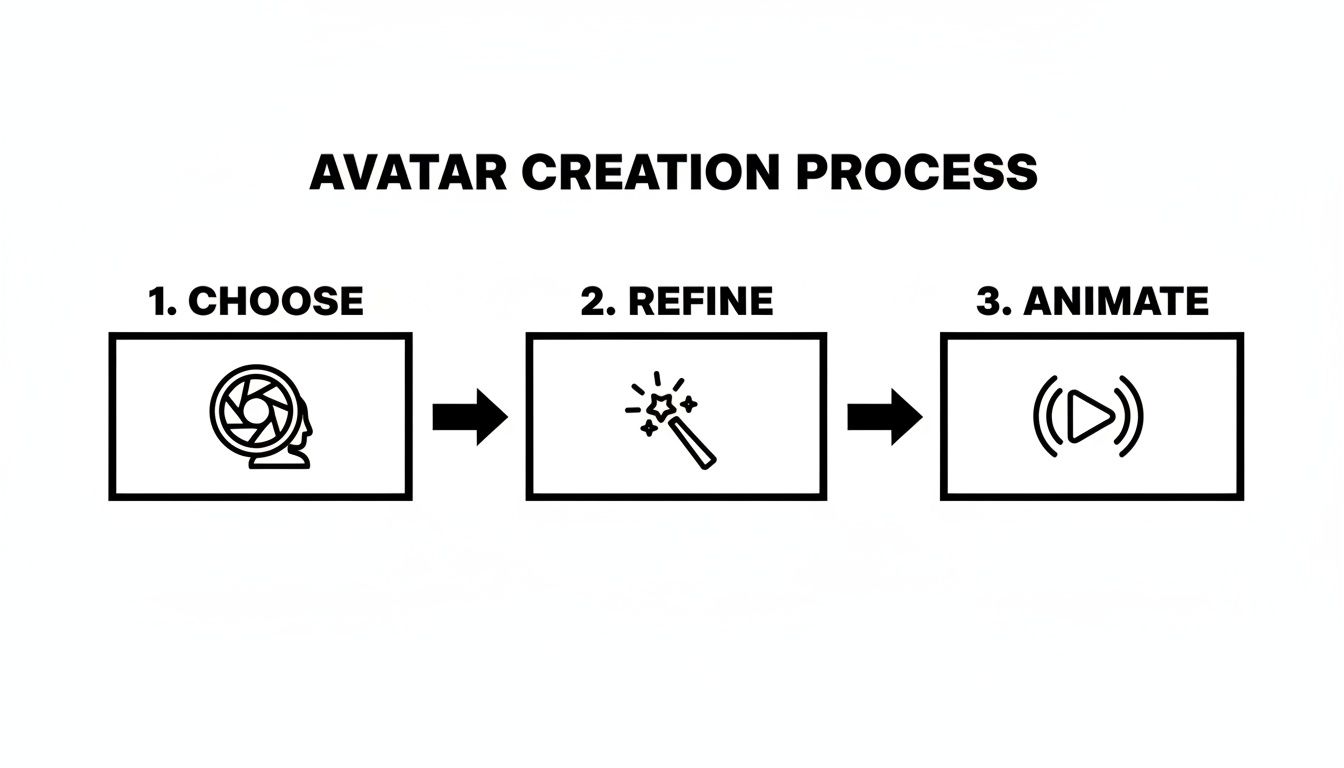
This workflow—choosing your base character, refining its look, and then animating it with a voice—is the fundamental sequence you'll use every time you bring a new digital persona to life.
These animation tricks are essential for creating compelling videos, but they're also starting to power real-time interactions. The market for interactive talking avatars has been exploding, growing from USD 444.70 million in 2019, with a 15% spike in adoption just last year. With US tech companies leading the charge, North America now accounts for over 39.2% of this market.
Nailing these details will take your content to the next level, turning a simple animation into a character that can genuinely captivate your audience. If you want to dive deeper, check out the other resources in our comprehensive creator guides.
Your Guide to Publishing and Monetizing Your Avatar
Okay, you’ve created your talking avatar. The technical part is done, but now the real adventure begins: turning that digital creation into a genuine online presence that actually makes money. This is where your strategy and creativity have to come together. You're not just managing a project anymore; you're building a brand.
First things first, you need to decide where your avatar will live and breathe. For short-form video, platforms like TikTok, Instagram Reels, and YouTube Shorts are gold mines. The content here needs to be snappy and visually arresting to stop people from scrolling past.
Nailing Your Content for Each Platform
Just blasting the same video everywhere won’t cut it. Each platform has its own vibe and audience expectations. You have to speak their language to get noticed.
- For TikTok: Jump on trends. Seriously. Use popular sounds and participate in challenges or duets. A more casual, unpolished feel often performs best here.
- For Instagram Reels: Think aesthetics. This is where higher-quality visuals, a consistent look, and more polished, story-driven content tend to thrive.
- For YouTube Shorts: This is a great spot for building a series. You can use your avatar to create bite-sized episodes, quick tutorials, or daily insights that give people a reason to subscribe and come back for more.
To see what's actually working, you need to track your performance. An Instagram engagement calculator is a great tool for this, giving you a clear picture of how people are interacting with your content. Use those insights to double down on what your audience loves.
How to Actually Make Money From Your Avatar
While big social media platforms are great for building an audience, specialized platforms like Fanvue and Fansly are where many creators are striking gold. These sites are designed for direct monetization and are incredibly open to AI influencers.
This is where you can get creative with your revenue streams:
- Brand Deals: Once you have an engaged audience, brands will pay you to feature their products. It works exactly like it does for human influencers.
- Exclusive Content Packs: A very popular model is selling themed photo and video sets. Your followers get exclusive content, and you get paid directly for your work.
- Custom Shoutouts: People love personalization. Offer to create custom video messages from your avatar for birthdays or special occasions. It’s a fun and easy way to monetize.
- Affiliate Marketing: This is the perfect place to start. You promote products you like, and when someone buys through your link, you get a cut. Learning about affiliate marketing for AI influencers at https://createinfluencers.com/affiliate is a smart move for generating income early on.
The market for this is exploding. The US AI avatar market alone was valued at USD 0.8 billion in 2024 and is projected to skyrocket to USD 18.1 billion by 2034. That's not just growth; it's a signal that the iron is hot.
To help you visualize the possibilities, here’s a breakdown of common monetization models.
Monetization Models for Your AI Avatar
| Strategy | Platform Suitability | Effort Level | Potential ROI |
|---|---|---|---|
| Brand Partnerships | Instagram, TikTok, YouTube | Medium to High | High |
| Exclusive Content Sales | Fanvue, Fansly | Medium | High |
| Personalized Videos | Fanvue, Cameo, Direct | Low | Medium |
| Affiliate Marketing | All Platforms | Low to Medium | Medium to High |
| Subscriptions/Tips | Fanvue, Fansly, Patreon | Low to Medium | High (recurring) |
Choosing the right mix of these strategies will depend on your avatar's brand and your audience. Don't be afraid to experiment and see what sticks.
Here's the bottom line: a successful avatar is a media business in disguise. Start treating it like one. A simple content calendar is your best friend. Plan your posts, actually engage with your comments, and stay consistent. That’s the secret sauce to building a loyal community that's happy to support you.
2. Advanced Tips and Troubleshooting Common Issues
Once you've got the basics down, it's time to take your work from good to great. This is where you move past just making an avatar talk and start tackling the subtle issues that can make a digital creation feel a little "off." Honing these skills is what separates a forgettable animation from a truly believable digital persona.
A couple of powerful techniques you can add to your toolkit are face and body swapping. This lets you take your avatar’s face and place it onto different bodies or into entirely new scenes. Suddenly, you can create all sorts of dynamic content without having to animate everything from the ground up. Imagine your avatar showing up in a packed city square one moment and a quiet coffee shop the next.
Another pro-level move is visual upscaling. If you have access to a tool with a HyperReal engine, you can take a standard-resolution image and bump it up to stunning HD quality. This process is a game-changer—it sharpens the fine details, smooths out textures, and gives your final video that polished, high-production look that grabs attention.
Overcoming the Uncanny Valley
One of the trickiest challenges you'll face is the "uncanny valley." It's that weird, unsettling feeling people get when an avatar looks almost human, but tiny imperfections make it feel creepy instead of lifelike. Getting out of this trap is all about focusing on realism and nuance.
The number one culprit is usually mismatched lip-sync. The second the mouth movements don't perfectly line up with the audio, the illusion shatters. Don't be afraid to re-process the video, maybe with a slight audio offset, or even try a different voice clip to see if the AI can get a better lock on the synchronization.
The secret to a believable avatar isn’t just about perfect animation—it's about hunting down and eliminating the tiny mistakes that scream 'artificial.' Spend your time refining the lip-sync, adding natural blinks, and making sure the head movements feel right for the tone of the voice. These small details make all the difference.
Fixing Common Animation Glitches
Even the most sophisticated AI will throw you a curveball now and then. Here’s how to tackle some of the most common glitches you’ll run into.
- Stiff or Robotic Movements: Does your avatar look too rigid? Try breaking up long monologues in your script. Using shorter sentences naturally creates more pauses and subtle head movements, which makes the whole animation feel less robotic.
- Frozen Expressions: Sometimes an avatar's face gets "stuck" after a really emotive word. A simple fix is to drop a neutral phrase or a short pause into the script right after it. This usually signals the AI to reset the avatar's expression to a more natural, resting state.
- Weird Eye Movement: Nothing is more distracting than unnatural eye darting or a dead-eyed stare. First, check your source image—make sure the eyes are clear and looking forward. If the problem keeps happening, regenerating the video or even slightly tweaking the head position in the original photo can often fix it.
Your Top Questions About Talking Avatars, Answered
Jumping into the world of AI personas always brings up a few questions. Whether you're a pro creator looking to add a new tool to your belt or you're just getting started, you need clear, no-nonsense answers. Let's tackle some of the most common things people ask about creating and using a talking avatar.
The best part? You absolutely don't need to be an animator, a graphic designer, or a coder to make this happen. Seriously. Modern AI platforms are built to be incredibly user-friendly. The whole process is usually just a few clicks: upload a photo, paste in your script, and hit "generate." The AI handles all the heavy lifting, like matching lip movements and creating natural facial expressions, behind the scenes.
Do I Really Need Any Technical Skills?
This is probably the biggest myth out there. The truth is, the tools we have today have completely torn down the old technical walls. If you can handle a simple photo editing app or post on Instagram, you already have every skill you need to create a talking avatar.
The game has changed. It's no longer about technical wizardry; it's about your creative vision. Your job is to dream up a personality for your avatar, write scripts that pop, and pick a style that your audience will love. The software does the rest, turning your concept into a finished video with surprisingly little effort.
Can I Actually Use My Talking Avatar for Business?
Yes, and that's precisely what many creators are doing. When you create an avatar and the video content on most platforms, you generally get the rights to use it for commercial purposes. This opens up a ton of possibilities, from running marketing campaigns and monetizing social media to building a presence on creator platforms like Fanvue or Fansly.
But before you go all in, just keep two critical things in mind:
- Check the Terms: Always take a minute to read the licensing agreement of the tool you're using. Some platforms have different rules for personal versus commercial use. It pays to know what they are.
- Own Your Image: Make sure the photo you use as a base is one you have the rights to. This means it's either your own selfie, a stock photo with a commercial license, or—the safest bet—an image that is 100% AI-generated. This will save you from major copyright headaches later on.
Authenticity isn't about being human; it's about being consistent. A believable avatar is one with a well-defined persona that shines through in its voice, style, and every word it says.
How Do I Make My AI Avatar Feel… Real?
Making an AI character feel authentic all boils down to consistency.
First, sketch out a simple backstory. Who is this character? What's their personality? Are they funny, serious, quirky? This little bit of prep work will guide every decision you make.
Next, give them a voice that fits. Play around with the text-to-speech settings—adjusting the pitch, speed, and tone—until it just feels right for the persona you've created. Most importantly, write dialogue that sounds like them. Don't just spit out facts; give them a unique way of speaking. Over time, that consistency is what builds a believable character your audience will actually connect with.
Ready to bring your own digital persona to life? With CreateInfluencers, you can turn a single photo into a dynamic talking avatar in just minutes. Start creating for free today and see what's possible.